How to Fix Your Ugly MIG Welds: Common Problems & Quick Solutions
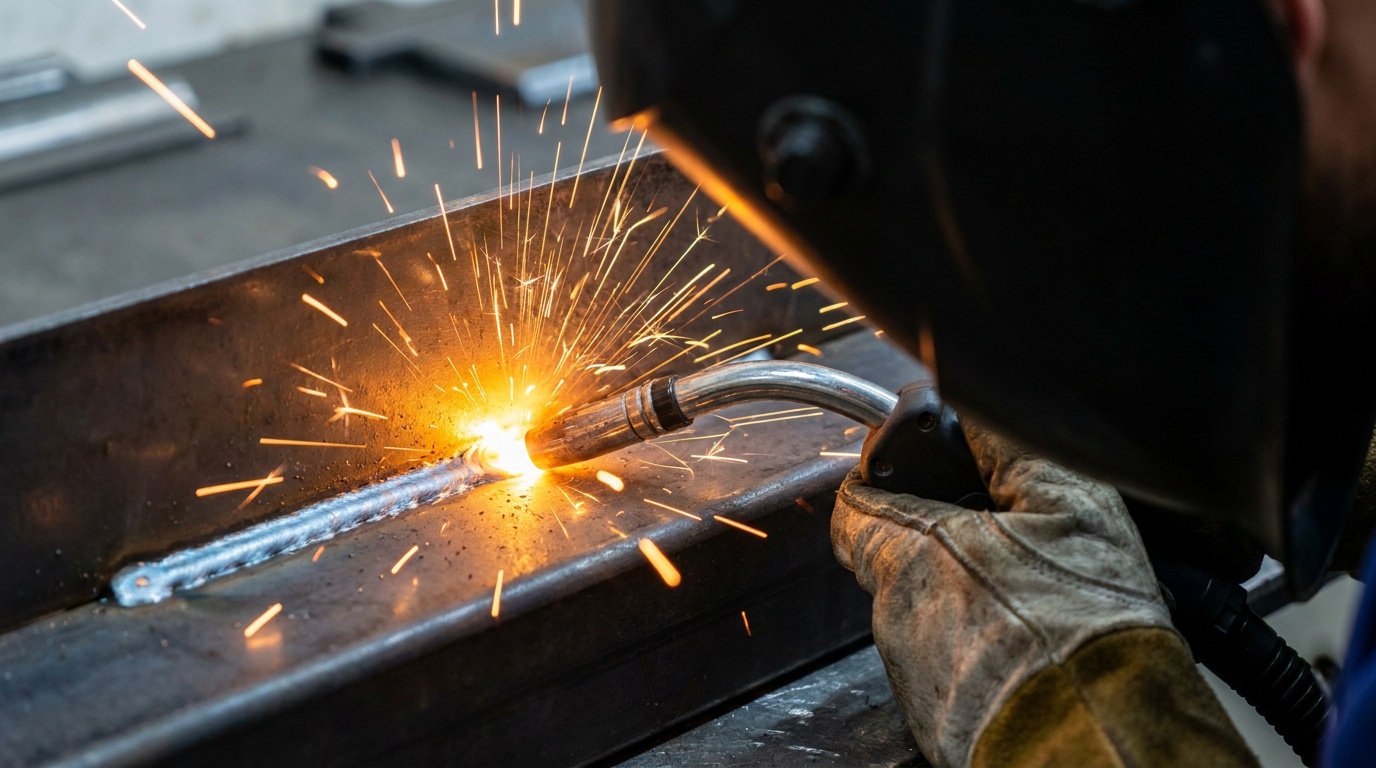
You just laid down what you thought was a decent MIG bead, then lifted your hood. Instantly, your stomach drops. It looks like a chewed-up piece of gum, full of holes, or just sitting on top of the metal. What the hell happened?
Don't beat yourself up. Every beginner, and even seasoned pros, battle ugly welds. The good news? Most ugly MIG welds aren't random acts of welding gods; they're symptoms of specific problems you can diagnose and fix.
Why Ugly Welds Are More Than Skin Deep
An ugly weld isn't just a cosmetic issue you can grind away. Those holes, humps, and gaps are weak points. They can lead to cracks, fatigue, and catastrophic failure down the line. We're not just making pretty pictures here; we're building strong, reliable joints.
Porosity: The Swiss Cheese Effect
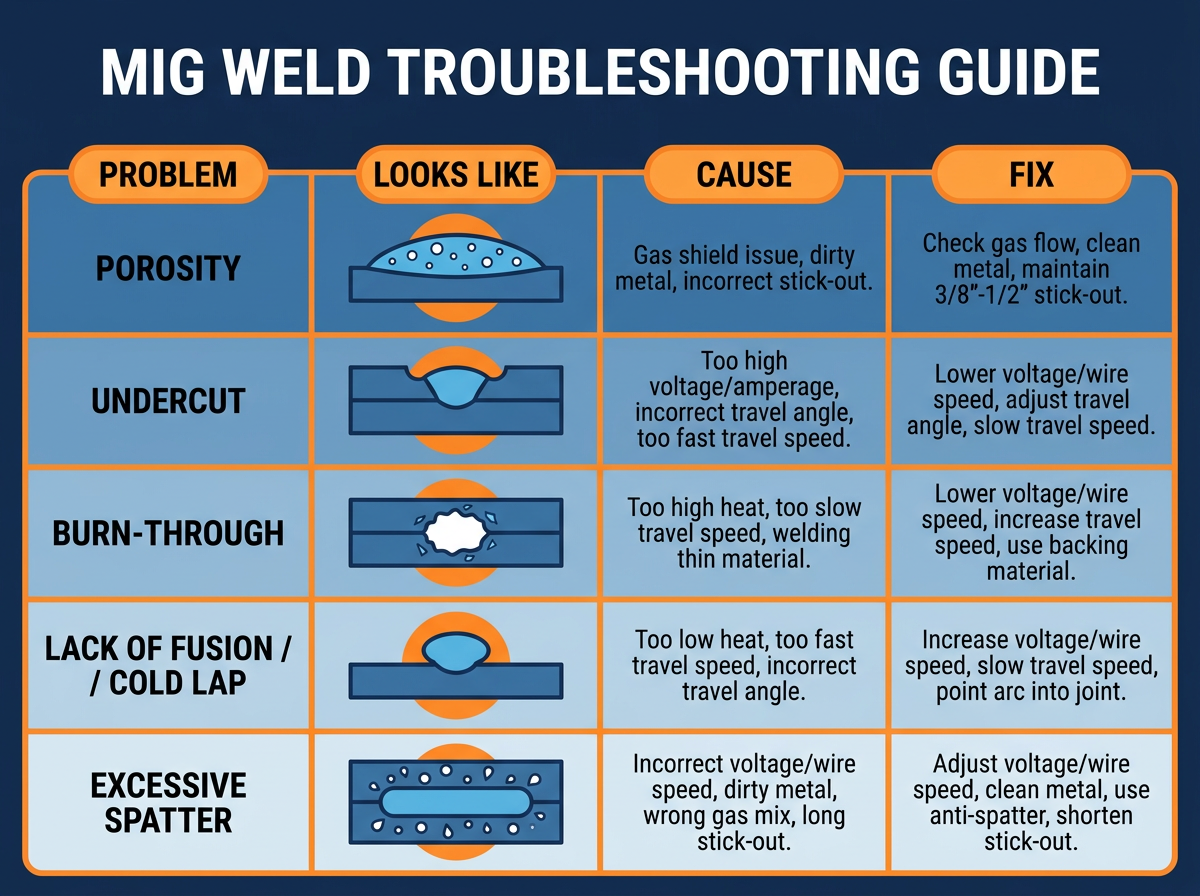
You see little pinholes or wormholes in your weld bead. Sometimes they're tiny, sometimes they look like someone shot it with a BB gun. That's porosity, and it means gas got trapped in your molten puddle.
The Fix: First, check your gas. Is the tank full? Is your gas flow rate set correctly (usually 15-25 CFH for MIG)? Got a leak in your hose or gun? Next, look at your metal. Dirty, rusty, painted, or oily metal will off-gas when heated, causing porosity. Clean that metal down to shiny bare steel with a grinder or wire brush. Finally, check your stick-out. If your wire sticks out too far, your gas shield won't protect the puddle.
Undercut: The Groove Problem
Your weld bead looks okay, but right along the edges where it meets the base metal, there's a noticeable groove or notch. That's undercut, and it's a weakness, reducing the joint's strength and thickness at that point.
The Fix: Undercut usually means you're running too hot, moving too fast, or holding the wrong angle. Try dropping your voltage or wire speed slightly. Slow down your travel speed, allowing the puddle to fill in the edges. Also, make sure your travel angle isn't too steep, which can blow metal away from the joint.
Burn-Through: The Blown-Out Hole
You're welding thin sheet metal, everything feels good, then BAM! A big hole blows right through your workpiece. Or maybe you just vaporized an edge. This is burn-through, the bane of thin metal welding.
The Fix: This is almost always a heat issue. You're too hot for the material thickness or your travel speed is too slow. Drop your voltage and wire speed. For thin stuff, a quick, consistent travel speed is key. Don't linger. You might also try a "whip and pause" technique, moving forward then slightly back into the puddle to let it cool a hair before moving forward again. Sometimes, a copper or aluminum backing plate can also save you.
Lack of Fusion / Cold Lap: The Puddle on Top
Your weld looks like a shiny bead of metal just sitting on top of the joint, not really melting into the base metal. It might look pretty, but it's not bonded. You could probably chip it off with a hammer.
The Fix: This happens when your heat is too low or your travel speed is too fast. The base metal isn't getting hot enough to fuse with the filler metal. Increase your voltage and/or wire speed. Slow down your travel speed to give the puddle time to penetrate. Make sure your gun angle is pushing the arc into the joint, not just across the surface.
Excessive Spatter: The Shower of Droplets
After you finish welding, your workpiece is covered in tiny, solidified metal droplets that are a pain to chip off. This isn't a structural flaw, but it's a huge time-waster for cleanup.
The Fix: Spatter often comes from incorrect voltage/wire speed balance. Too high voltage for your wire speed, or vice-versa. Start by fine-tuning your settings. Check your gas type; CO2 produces more spatter than C25 (75% Argon/25% CO2). Make sure your metal is clean, as contaminants can cause popping. Your stick-out can also play a role; a shorter stick-out generally means less spatter. A little anti-spatter spray on the workpiece and nozzle helps too.
Common Mistakes Beginners Make
Ignoring the Sound: A good MIG weld sounds like bacon frying. If it's popping, hissing, or crackling harshly, something's off. Listen to your machine!
Skipping Metal Prep: Seriously, clean your metal. Rust, paint, mill scale, and oil are your enemies.
Inconsistent Stick-Out: Letting your wire stick out too far (more than 1/2") messes with your shielding gas and heat input. Keep it consistent.
Travel Speed Rollercoaster: Going too fast, then too slow, then fast again. Find a rhythm and stick to it.
Panicking and Over-Adjusting: Don't change five settings at once. Adjust one thing, make a test weld, then adjust again if needed. Systematic diagnosis is key.
Get Your Welds Looking Good, Not Like Garbage
Welding isn't magic; it's a skill built on understanding cause and effect. Now you know the common culprits behind ugly MIG welds and how to fix them. Grab some scrap, dial in those settings, and practice. You've got this.
Quinn "The Fixer" Morrissette
Join 30,000+ students learning to weld at home with my online course:
>>> Check out 1 Day Welder here
>>> Shop the 1 Day Welder Amazon Store