How to Identify Mystery Metals Before You Weld
I almost welded galvanized steel once without knowing it.
I was 19, working out of a buddy's shop, and I grabbed a chunk of "scrap" off the floor. Looked like regular mild steel. Smelled like nothing. Felt about right in my hand.
The second I struck an arc, I knew.
That sweet, slightly metallic burn in the back of my throat? That's zinc. And zinc fumes give you something called metal fume fever — chills, fever, body aches, the works. Some people end up in the hospital.
Lucky for me, I figured it out in about four seconds and walked outside.
But here's the deal: you gotta know what metal you're working with BEFORE you strike an arc. Not just for safety. For the weld itself.
Why it matters
Different metals need different filler. Different gas. Different amperage. Different prep.
Try to MIG weld stainless with regular ER70S-6 wire and 75/25 gas? You'll get a brittle, cracked mess that fails the first time you load it.
Try to weld cast iron like it's mild steel? It'll crack the second it cools.
Try to weld galvanized? Porosity, ugly bead, and a lung full of zinc.
The good news: a five-minute test on your bench will tell you 90% of what you need to know.
The Spark Test (your best friend)
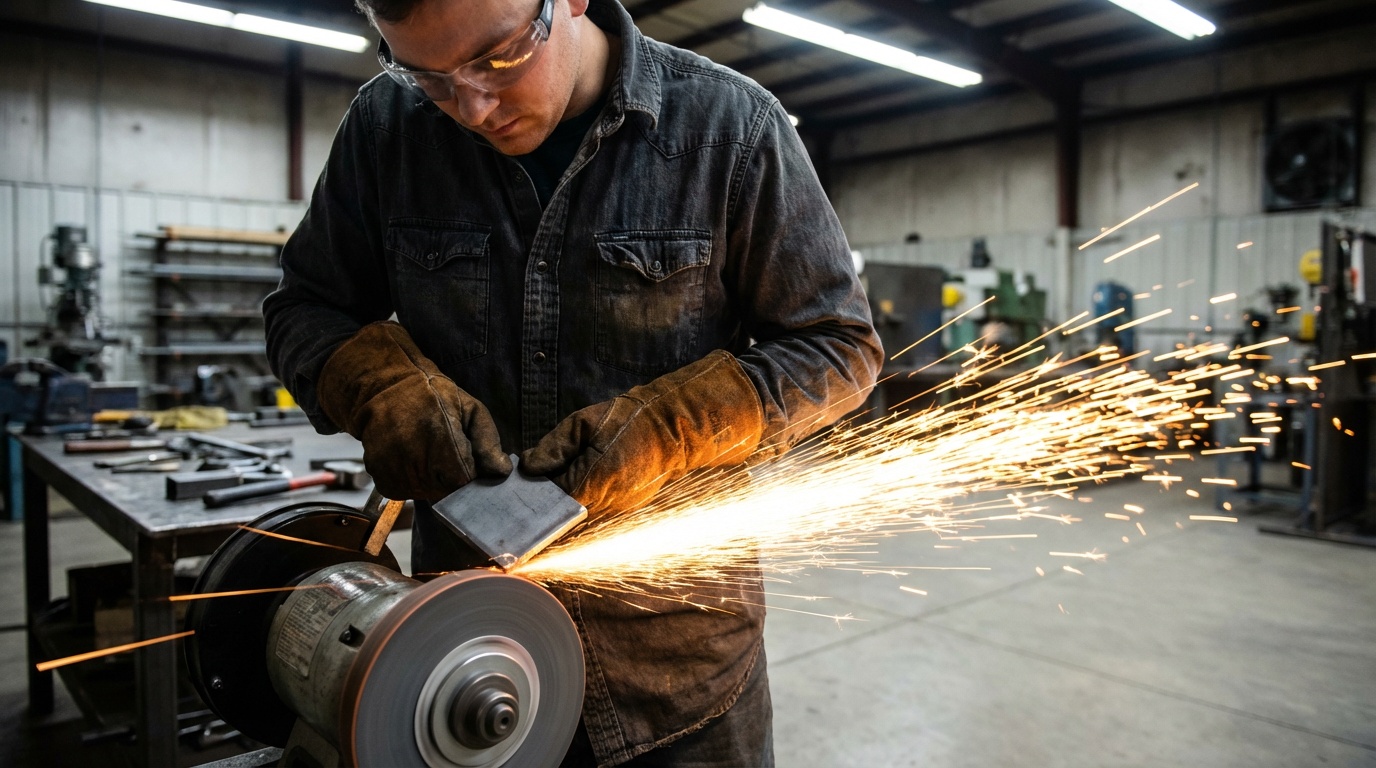
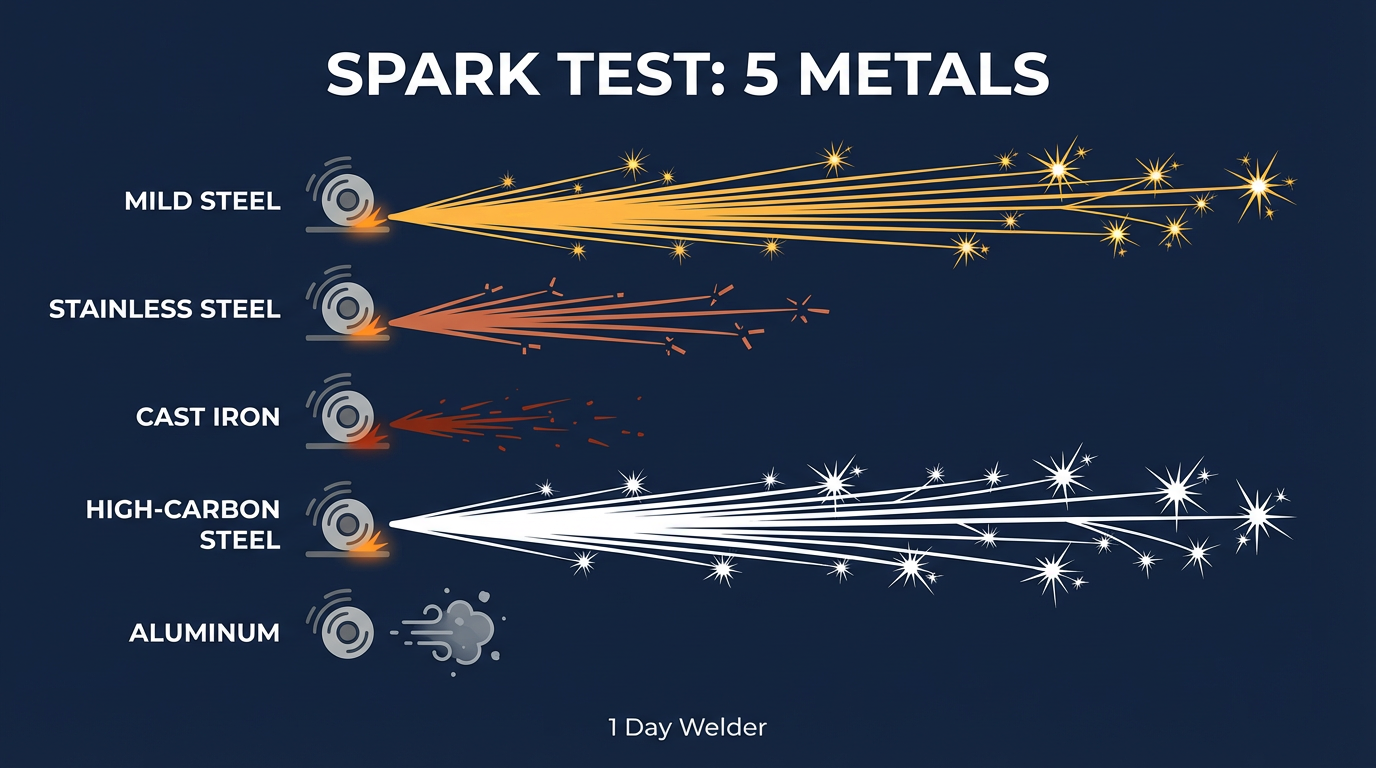
Touch the metal to a bench grinder wheel and watch the sparks.
- Mild steel: long, yellow-orange sparks with a few small bursts at the tip.
- Stainless steel: short, dull orange-red sparks. Way fewer bursts. Almost lazy compared to mild steel.
- Cast iron: short, dim red-orange sparks that don't go far. Heavy, kinda sad-looking.
- High-carbon steel: bright white sparks with lots of star-shaped bursts down the trail.
- Aluminum: no sparks. Just a smooth grinding sound and aluminum dust.
I keep a labeled piece of known mild steel and a labeled piece of known stainless on my bench specifically for this. Once you've spark-tested them side by side, you'll never confuse them again.
The Magnet Test
Easy. Stick a magnet on it.
- Sticks hard? Mild steel, cast iron, or some carbon steels. Most likely something you can MIG with regular wire.
- Doesn't stick? Aluminum, copper, brass, or 300-series stainless (304, 316).
- Sticks weakly? Could be 400-series stainless (410, 430), some nickel alloys, or a steel with a heavy non-magnetic coating.
The magnet test alone won't tell you if it's stainless or aluminum — neither sticks. That's why you pair it with the spark test.
Color, Weight, and Sound
Grind a clean spot first. Surface oxidation lies. So does paint and mill scale.
- Aluminum: light gray, very light in your hand, dull "thunk" when you tap it.
- Stainless: silvery-bright, heavy, rings like a bell.
- Mild steel: dull gray, heavy, dead "clunk" sound.
- Copper: orange-pink, heavy, rings.
- Brass: yellow-gold, heavy, rings.
- Cast iron: dark gray, heavy, dead thud.
Pick it up. Tap it with a hammer. Trust your hands — your senses are better than you give them credit for.
When to walk away
Some metals you don't weld at home. Period.
- Galvanized steel (zinc coating, dull silver-gray, sometimes a crystalline pattern called spangle): grind the coating off at least 2 inches back from the weld zone, OR don't weld it. Zinc fumes are no joke.
- Cadmium-plated (yellow-gold or rainbow tint, common on old hardware and aircraft parts): cadmium fumes are seriously toxic. Don't weld plated cadmium ever.
- Lead-painted or lead-soldered (old plumbing, very old equipment): hard no.
- Beryllium copper (some aerospace and electrical scrap): the dust is carcinogenic. Walk away.
If you can't ID a coated piece and you suspect it's been galvanized or plated, just don't. Clean steel is cheap. Your lungs aren't.
Common Mistakes
Most people get tripped up the same handful of ways. Don't be most people.
- Skipping the grind step. Surface rust, mill scale, and paint will hide what's underneath. Grind a clean spot before you spark-test.
- Trusting the magnet alone. Aluminum and 300-series stainless both fail the magnet test. You need the spark wheel to tell them apart.
- Assuming all stainless is non-magnetic. 400-series stainless IS magnetic. If a magnet sticks, it's not automatically mild steel.
- Welding shiny coated metal "just to see what happens." That's how you end up with metal fume fever or a poisoned shop.
- Throwing away the offcuts from known stock. Save labeled scraps from the steel and stainless you order. Those become your reference samples.
The whole process takes less than five minutes once you've done it a few times. Five minutes to dodge a ruined weld, a wasted afternoon, or a hospital visit.
You can do this. It's not magic — it's just paying attention.
Join 30,000+ students learning to weld at home with my online course:
>>> Check out 1 Day Welder here
>>> Shop the 1 Day Welder Amazon Store
Talk soon,
Quinn "still smell that zinc sometimes" Morrissette
P.S. Tape a labeled spark-test sample of mild steel and stainless to the back of your grinder. Took me ten years to think of doing it. Single best two-dollar shop upgrade I ever made.