How to Protect Your Lungs When Welding: Fume Extraction for Beginners
That sweet smell of hot metal isn't just a byproduct of a good weld. It's a cocktail of toxic fumes silently attacking your lungs, and if you're not careful, it'll mess you up faster than a dropped electrode. You can build incredible things with metal, but not if you can't breathe.
Every time you strike an arc, you're not just melting metal. You're vaporizing it, along with any coatings, and creating microscopic particles and gases. These invisible enemies can cause anything from immediate "metal fume fever" – feeling like the flu – to long-term chronic bronchitis, emphysema, even various cancers. Ignoring proper ventilation isn't tough; it's just plain dumb.
Your Shop's Secret Killer: Understanding Welding Fumes
Welding fumes are a complex mix. Think of tiny solid particles of the base metal and filler, plus gases like carbon monoxide (CO), ozone (O3), and nitrogen oxides (NOx). The exact recipe depends on what you're welding, what process you're using, and what's on the metal.
Weld stainless steel? You're dealing with chromium and nickel compounds – nasty stuff. Welding galvanized steel? Zinc fumes are the culprit behind metal fume fever. Even plain mild steel produces iron oxides, which can irritate your respiratory system over time. Don't underestimate any of it.
The Hierarchy of Control: Ventilation Strategies That Work
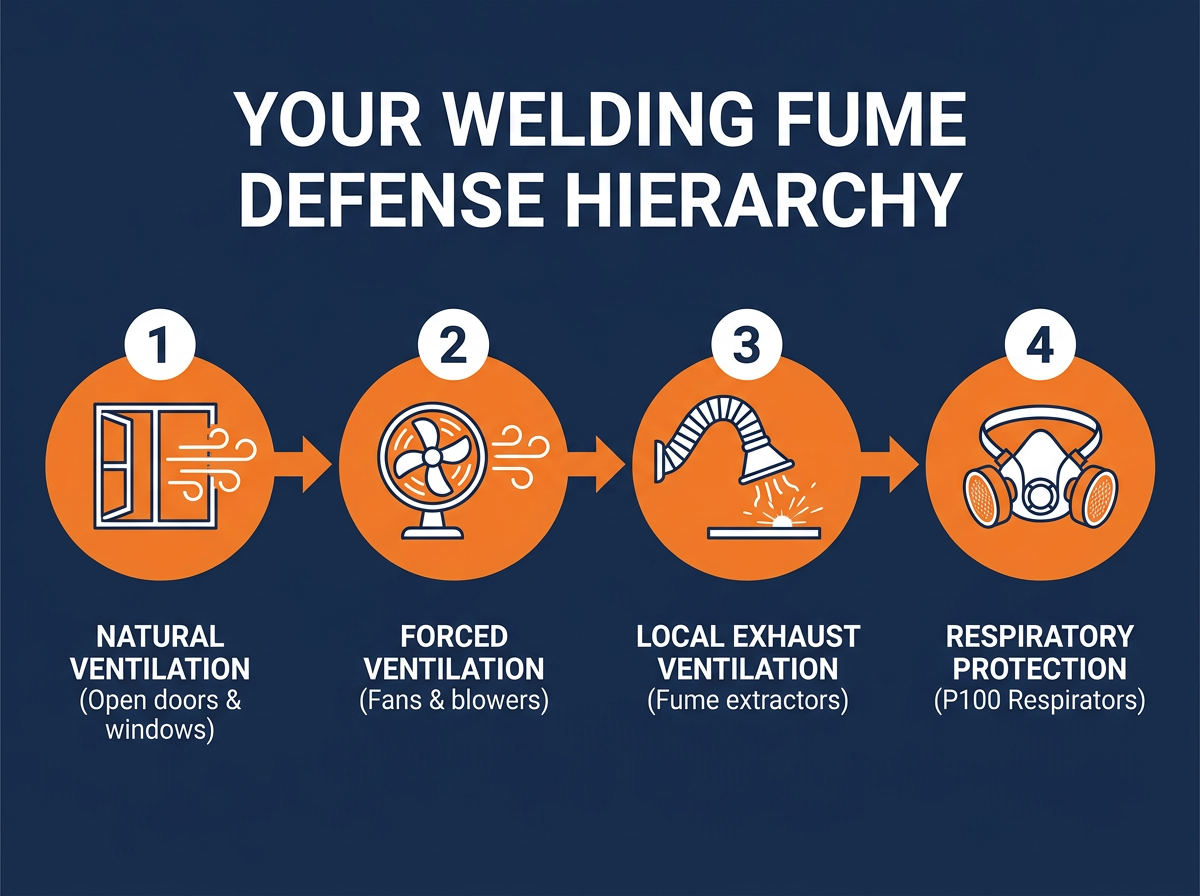
You need layers of defense. First up, natural ventilation: open doors and windows. It's better than nothing, but rarely enough for consistent welding, especially in a small garage or shop. This is your absolute minimum, not your primary solution.
Next, forced ventilation. Think big fans blowing air in or out of your workspace. This helps dilute the fumes in the general area. Position fans carefully to create a cross-breeze that moves fumes away from your breathing zone, not just swirls them around.
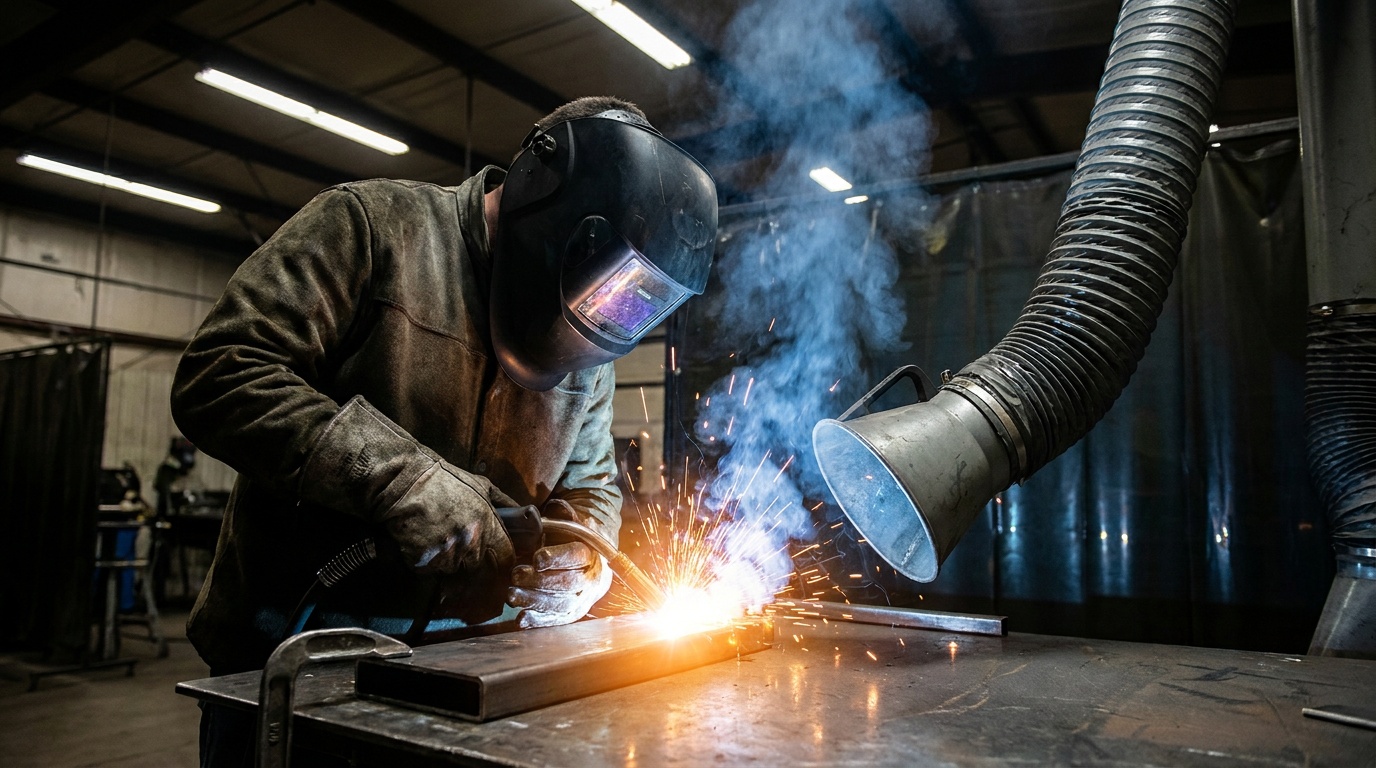
The real game-changer is Local Exhaust Ventilation (LEV). This is your fume extractor – a specialized unit with a hood or nozzle that sucks fumes directly at the source, before they even reach your face. Brands like Miller, Lincoln Electric, and even Hobart offer portable fume extractors designed for home shops.
Finally, Personal Protective Equipment (PPE) like respirators. This is your last line of defense, meant to supplement, not replace, good ventilation. Don't rely on a respirator as your only solution if you can get fumes out of the air.
Picking the Right Gear: Fume Extractors & Respirators
When it comes to fume extractors, look at their CFM (Cubic Feet per Minute) rating. More CFM means more air pulled. A good portable unit, like a Miller FILTAIR or a Lincoln Mobiflex, can be moved right to where you're working. Make sure it has a high-quality filter system, usually multi-stage, to catch those microscopic particles.
For respirators, ditch the flimsy N95 dust masks. They won't cut it for welding fumes. You need a P100 particulate respirator. This could be a half-face mask that covers your nose and mouth, or a full-face mask for added eye protection. Make sure it's NIOSH-approved and has replaceable P100 cartridges. Always get a good fit – a leaky mask is useless.
Practical Tips for a Safer Breath
The simplest trick costs nothing: keep your head out of the plume. Position yourself so the smoke and fumes rise away from your face and into your ventilation system. This takes conscious effort but makes a huge difference.
Always clean your base metals. Welding over paint, grease, rust, or especially galvanized coatings releases extra hazardous fumes. Grind it clean first. It doesn't just make for a stronger weld; it makes for cleaner air.
Know your material. Welding mild steel is one thing, but stainless steel, chromium alloys, or anything with cadmium or lead coatings requires extra vigilance. These metals produce particularly nasty fumes that demand top-tier ventilation and respiratory protection. When in doubt, assume it's toxic.
Don't Be That Guy: Common Fume Extraction Mistakes
- Just a Fan Pointed at You: A fan blowing air at your face or around the fumes doesn't remove them. It just spreads them around your shop and into your lungs. You need to pull the fumes away from the source.
- Trusting a Standard Dust Mask: An N95 might stop sawdust, but it's completely inadequate for microscopic welding fumes. You need a P100 respirator, specifically designed for fine particulate matter.
- "It's Just a Quick Tack": Every arc strike releases fumes. Even for a short tack weld, the initial burst of fumes can be concentrated and dangerous. Get in the habit of using your ventilation for every weld.
- Ignoring the Smell or Irritation: If you can smell the fumes or feel irritation in your throat or eyes, your ventilation isn't good enough. Your body is telling you there's a problem. Listen to it.
- Neglecting Filter Maintenance: Fume extractor filters get clogged. Respirator cartridges have a lifespan. A dirty filter or expired cartridge is useless. Clean or replace them regularly, or you're just breathing filtered wishes.
Welding is one of the most rewarding skills you can learn, but it's not worth sacrificing your health. Take your shop's air quality seriously. Invest in good ventilation, wear the right respirator, and make these practices second nature. Breathe easy, weld strong, and stick around for years to come.
Quinn "The Lung Protector" Morrissette
Join 30,000+ students learning to weld at home with my online course:
>>> Check out 1 Day Welder here
>>> Shop the 1 Day Welder Amazon Store