How to Stop Your Welds From Cracking
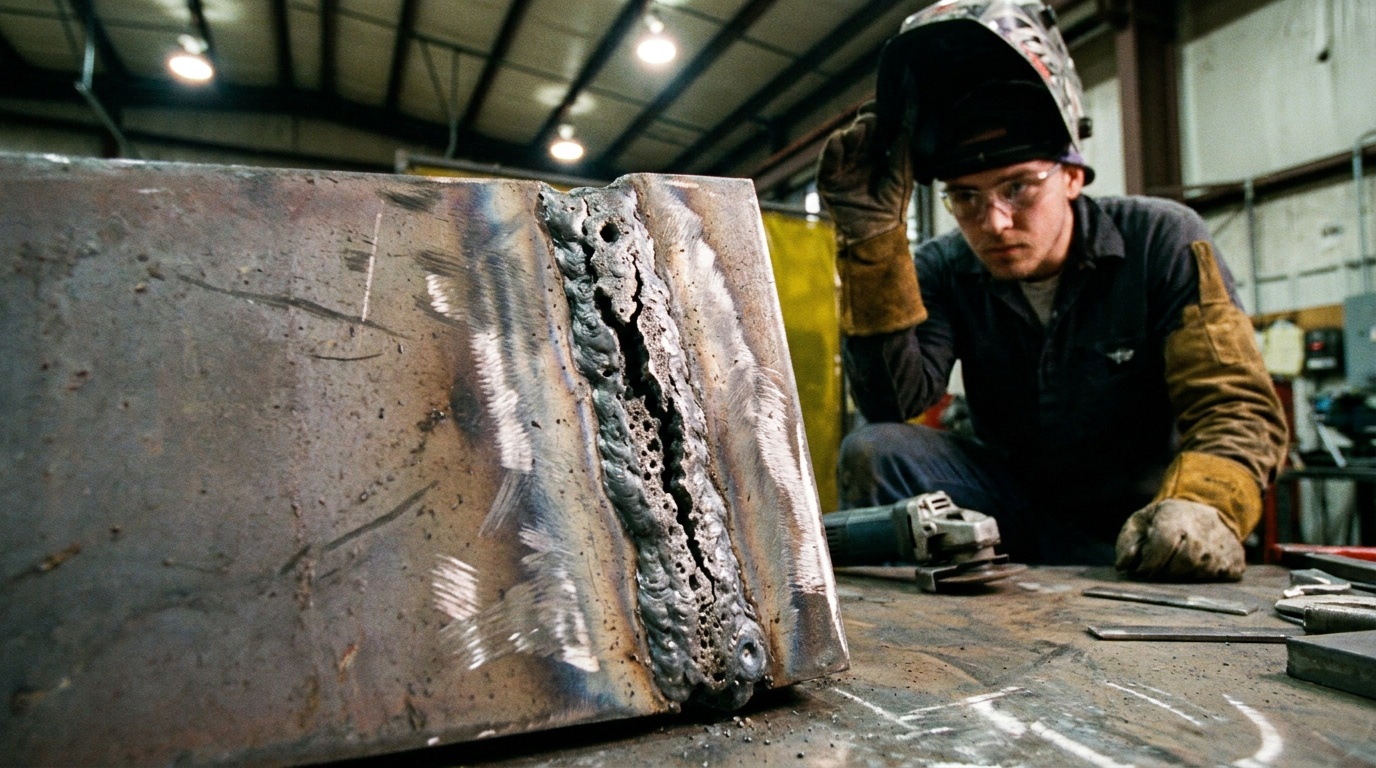
Your weld just cracked. Again. That sickening snap isn't always your fault – not entirely, anyway. You laid down what looked like a perfect bead, only to watch a hairline fracture appear as it cooled.
This isn't just ugly. A cracked weld is a weak weld. You're pouring time and money into something that'll fail, maybe even hurt someone. We're building stuff that lasts, not junk. Let's get you building strong, reliable welds.
Prep Your Metal Like Your Life Depends On It
This is where most beginners mess up. You can't weld over rust, paint, oil, or even invisible mill scale and expect a solid joint. Those impurities get trapped in the weld puddle, weakening it and creating stress points that crack.
Grab a 4.5" angle grinder with a wire wheel or a 60-grit flap disc. Clean at least an inch back from your weld joint, on both sides and the joint itself. For stubborn oils or grease, a quick wipe with acetone or denatured alcohol works wonders. Clean metal is happy metal.
Get That Penetration Deep and Even
Lack of fusion is a crack waiting to happen. If your weld isn't digging into both base metals, you&ve got cold lap, and that creates internal stresses. You need to dial in your settings and master your travel speed.
If you're running a Lincoln Electric EasyMIG 140 on 1/4" mild steel, don't blast across the joint like it's a race. Slow down. Watch that puddle fuse into the base metal. You might need to bump your voltage up a hair or drop your wire speed if you're just piling metal on top without penetration.
Pick the Right Filler and Joint Design
You wouldn't use a coat hanger to hold up your engine, so don't use the wrong filler metal for a critical weld. Match your filler to your base metal's strength and composition. For most mild steel, ER70S-6 MIG wire or E7018 stick electrodes are a good bet.
Joint design also matters. Trying to bridge a 1/4" gap with a single pass on thin material is asking for trouble. For thicker metals, bevel your edges to create a "V" or "J" groove. This gives you space to get good penetration and deposit enough filler metal for a strong joint.
Manage the Heat – It's a Balancing Act
Thermal stress is a huge crack culprit. When metal heats up and cools down unevenly, it pulls itself apart. For thicker sections or certain alloys (like some high-carbon steels), preheating can be a game-changer. Use a rosebud torch to bring the entire area up to 200-300°F before welding.
And for crying out loud, don't quench a hot weld with water or compressed air. Let it cool naturally. Rapid cooling makes the metal brittle and prone to cracking. Take your time, walk away, and let nature do its thing.
Common Mistakes That Lead to Cracks
Welding Over Contamination: Rust, paint, oil – it all gets trapped in the weld, creating weak spots. Clean it. Every single time.
Lack of Penetration: Too cold settings or too fast travel speed means your weld sits on top of the metal, not fused into it. It'll snap right off.
Wrong Filler Metal: Using a filler metal that's weaker or incompatible with your base material is a recipe for failure. Match 'em up.
Poor Joint Fit-Up: Trying to bridge huge gaps with a single pass creates massive stress. Close those gaps, bevel your edges, and tack properly.
Rapid Cooling: Quenching a hot weld causes thermal shock and makes the metal brittle. Step back and let it air cool.
Welding takes practice, but understanding these principles saves you headaches and wasted material. Don't get discouraged by a few cracks; learn from them. Keep learning, keep pushing that puddle, and soon you'll be laying down flawless, crack-free beads.
Quinn "The Welder" Morrissette
Join 30,000+ students learning to weld at home with my online course:
>>> Check out 1 Day Welder here
>>> Shop the 1 Day Welder Amazon Store