How to TIG Weld Aluminum Without Making a Mess
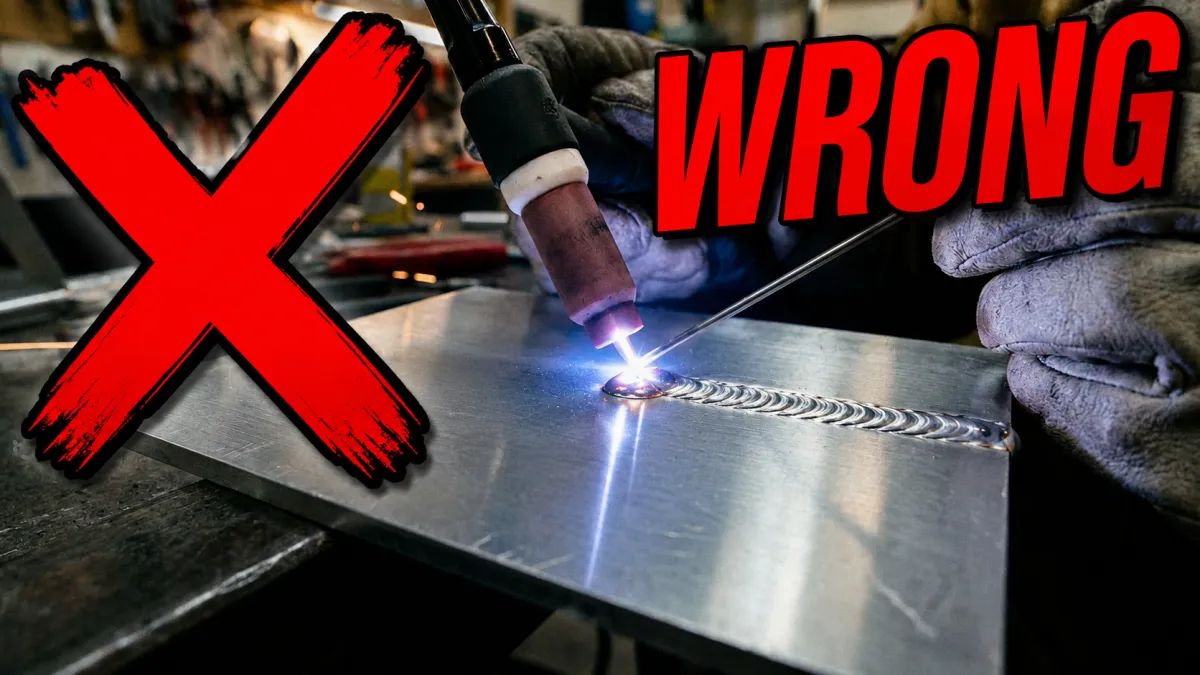
Aluminum ain't like steel. Try to TIG weld it the same way and you'll end up with a mess of molten gum, or worse, a hole.
Many beginners get stumped when they first try to TIG aluminum. It reacts differently, requires specific machine settings, and demands a clean approach. But once you crack the code, you'll open up a whole new world of projects.
Why Aluminum is a Different Beast
Aluminum has a few quirks that make it unique for welding. First, it's got a low melting point, but that's not the real kicker. The problem is its oxide layer.
Aluminum forms a super tough oxide layer on its surface that melts at almost three times the temperature of the base metal. You gotta bust through that crust to get a good weld, and that's where AC current comes in.
Switch to AC: Your Oxide Breaker
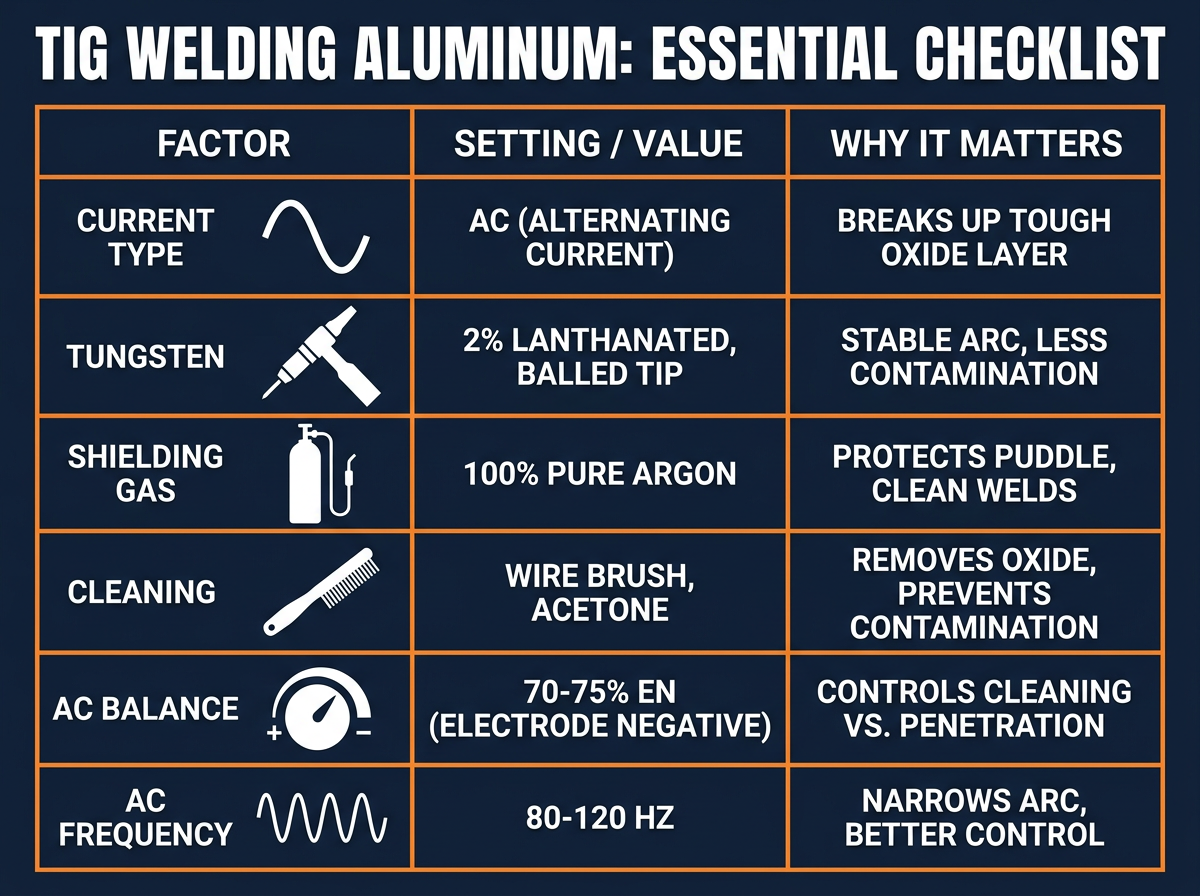
Forget DC for TIG welding aluminum – unless you're welding something super thin with helium, which you're not doing right now. You need AC, or Alternating Current.
An AC arc cycles rapidly between electrode positive (EP) and electrode negative (EN). The EN half provides deep penetration, while the EP half blasts through that stubborn oxide layer, cleaning the metal as you go. Machines like the Miller Dynasty 210 or Lincoln Square Wave 200 make this easy.
Tungsten Prep: Ball it Up (or Not Quite)
For AC TIG welding aluminum, you'll want a 2% Lanthanated or Zirconiated tungsten. Don't use pure tungsten – it's old school and doesn't hold up as well.
Instead of a super sharp point like you'd use for DC steel, you want a slightly blunted or "balled" tip. Grind it to a blunt cone, and the AC current will naturally form a small, clean ball on the end. This wider tip helps stabilize the arc and gives you better cleaning action.
Dialing In Your Settings: Frequency & Balance
This is where TIG welders like the Hobart EZ-TIG 165i really shine with their advanced controls. Beyond just amperage, you've got AC Frequency and AC Balance.
AC Frequency: Think of this like focusing your arc. Higher frequency (80-150 Hz) gives you a tighter, more focused arc, which means more control and a narrower bead. Lower frequency spreads it out. Start around 100-120 Hz for general work.
AC Balance: This sets the proportion of EP (cleaning) to EN (penetration). More EP means more cleaning action but less penetration and a hotter tungsten. More EN means deeper penetration but less cleaning. For most aluminum, set your balance to 70-75% EN. This gives you a good mix of cleaning and penetration without overheating your tungsten.
Cleanliness is Godliness: Seriously
This isn't an option, it's a commandment. Aluminum is incredibly reactive, and any oil, grease, paint, or even invisible oxide will ruin your weld.
Brush your aluminum with a dedicated stainless steel wire brush that's ONLY used for aluminum. Then wipe it down with acetone or denatured alcohol right before you weld. Don't touch the weld area with your bare hands after cleaning – your skin oils will contaminate it.
Common Mistakes When TIG Welding Aluminum
Forgetting to Switch to AC: Beginners try to use DC, leading to a dirty, unstable arc and no penetration. The oxide layer laughs at DC.
Not Cleaning the Metal: Leaving even a slight film or oxide layer guarantees porosity, black soot, and a weak weld. It's a non-negotiable step.
Wrong Tungsten or Tip Prep: Using a pure tungsten or a needle-sharp tip will cause arc instability and contamination. Get the right type and prep it right.
Too Much Heat, Too Slow: Aluminum conducts heat fast. If you go too slow or use too much amperage, you'll end up with a huge, sagging puddle or blow right through thin material. Move with purpose.
Incorrect Gas Flow: Too little argon and your weld will oxidize and turn black. Too much and it can cause turbulence, drawing in air. Aim for 15-20 CFH (Cubic Feet per Hour) for most applications.
TIG welding aluminum might seem intimidating at first, but with the right setup and a focus on cleanliness, you'll be laying down those stacked dimes in no time. Stick with it, practice those settings, and watch your welds transform.
Quinn "The Aluminum Alchemist" Morrissette
Join 30,000+ students learning to weld at home with my online course:
>>> Check out 1 Day Welder here
>>> Shop the 1 Day Welder Amazon Store