Master Your MIG Gun Consumables The Secret to Perfect Beads
Your MIG welds look like Swiss cheese, or your wire keeps jamming. You're probably blaming your welder, but the real culprit is sitting right on the end of your gun: your consumables.
These small, often-ignored parts — the contact tip, nozzle, and gas diffuser — are critical for consistent wire feed, proper gas coverage, and a stable arc. Skimp on them, and you'll fight every bead. Get 'em right, and you'll be stacking dimes.
The Unsung Hero: Your Contact Tip
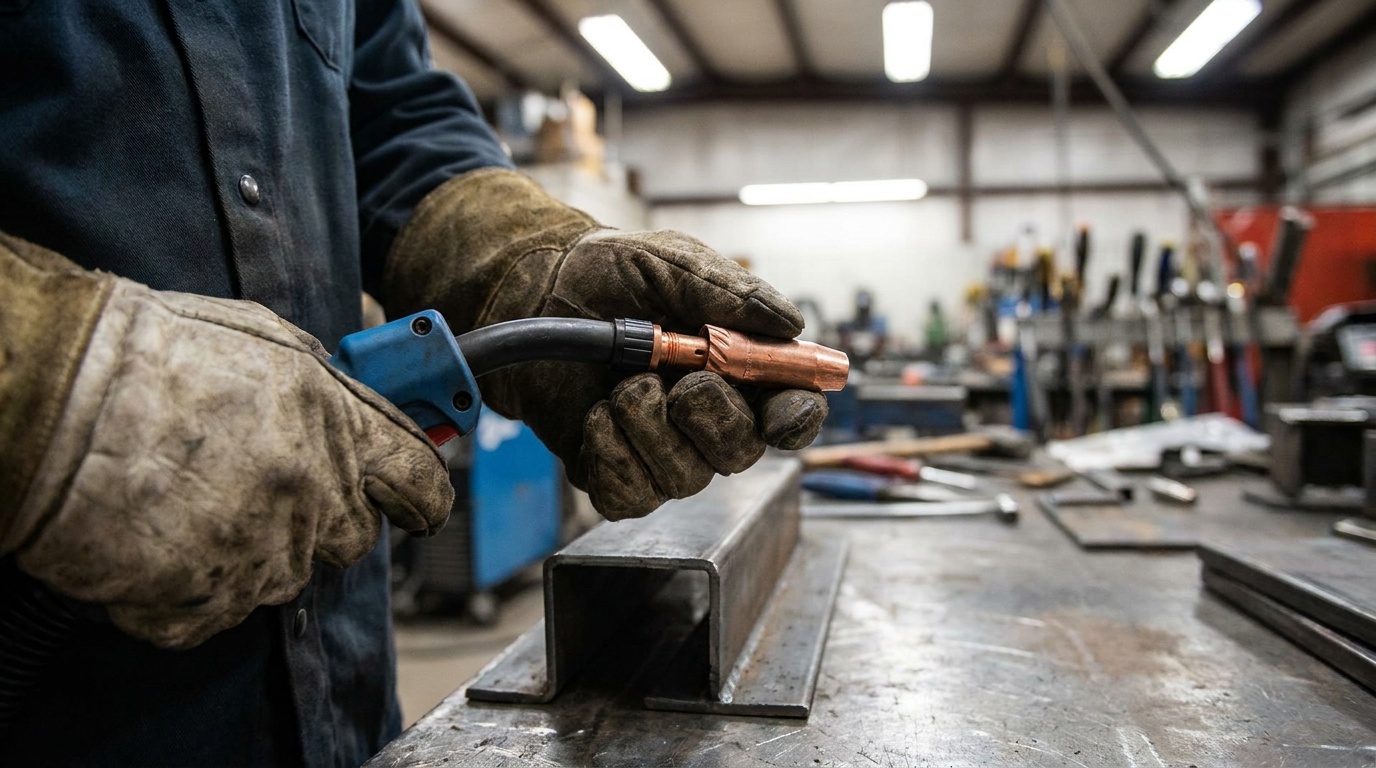
This little copper tube is where the magic happens. It transfers the electrical current to your welding wire, creating the arc. It also guides the wire right where you want it.
Contact tips wear out. Period. As the wire feeds through, it abrades the inside diameter, creating an oval shape. A worn tip means poor electrical contact, an unstable arc, and that dreaded birdnesting in your wire feeder.
Always match your contact tip size to your wire diameter exactly. Running .035" wire? Use an .035" tip. Keep a handful of spares — Lincoln Electric, Miller, or Hobart tips are all good — and swap them out when your arc gets squirrelly or your wire feed isn't smooth.
Shielding Your Arc: The Nozzle
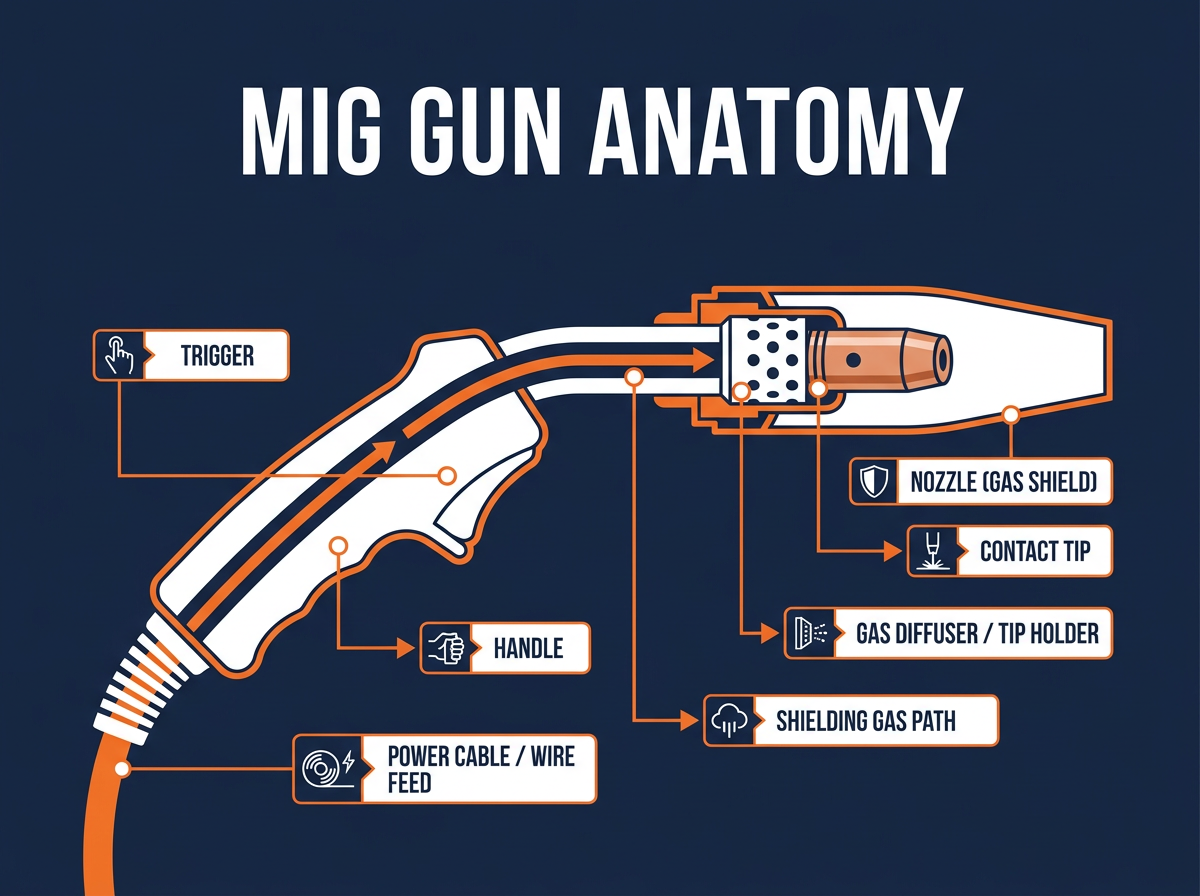
The nozzle's job is simple but vital: direct the shielding gas around your weld puddle. This protects the molten metal from atmospheric contamination, preventing porosity and weak welds.
Nozzles come in various shapes and sizes: tapered for tight access, straight for better gas coverage, and larger bores for higher amperage or longer stick-out. Most beginners start with a standard tapered nozzle, which is a good all-rounder.
Keep your nozzle clean! Spatter buildup inside blocks gas flow, leading to poor coverage and porous welds. Use anti-spatter spray before you start welding, and regularly knock out any crud with a pair of welding pliers. If it's cracked or heavily spattered, toss it and grab a new one.
The Brains of the Operation: The Gas Diffuser
Hidden inside the nozzle, the gas diffuser is the unsung hero that makes sure your shielding gas gets to the puddle evenly. It's often called a tip holder because it also threads in and holds your contact tip in place.
A clogged or damaged diffuser will cause uneven gas flow, leading to inconsistent welds and porosity, even if your nozzle looks clean. If your contact tip feels loose or wobbles, or if your gas coverage seems off despite a clean nozzle, your diffuser is likely the problem.
Clean your diffuser regularly with a wire brush or by carefully blowing it out with compressed air. They don't wear out as fast as contact tips, but they definitely need replacing when they get gunked up or damaged. Miller and Esab diffusers are usually built tough, but none are invincible.
The Right Fit: When to Swap Consumables
It's not just about wear and tear. Sometimes, you need to change your consumables to match the job. Welding thin sheet metal in a tight corner? A smaller, tapered nozzle will give you better access.
Running a different wire size? You need a new contact tip. Welding with higher amperage for thicker material? A larger nozzle can help provide better gas coverage over a wider puddle. Always have a variety on hand. You wouldn't use a wrench when you need a socket, right? Same principle here.
Common Mistakes
- Not cleaning spatter from your nozzle: Let that crud build up and you'll choke off your shielding gas, guaranteed porosity.
- Using the wrong size contact tip for your wire: An undersized tip will restrict wire feed; an oversized one will give you poor electrical contact and an erratic arc.
- Ignoring a worn-out gas diffuser: It's out of sight, out of mind, but a bad diffuser means uneven gas flow and major weld defects.
- Over-tightening your contact tip: You don't need to crank it down with a pipe wrench. Hand-tight is usually plenty, then a light snug with pliers.
- Not having spares on hand: Nothing kills a welding session faster than running out of contact tips or a clean nozzle in the middle of a project.
Don't let cheap or neglected parts sabotage your hard work. A few bucks on fresh consumables can turn ugly blobs into stack-of-dimes perfection. Invest in your tools, and they'll invest in your welds.
Keep those tips clean, those nozzles clear, and those diffusers flowing. You'll thank me later.
Quinn "The Welder Whisperer" Morrissette
Join 30,000+ students learning to weld at home with my online course:
>>> Check out 1 Day Welder here
>>> Shop the 1 Day Welder Amazon Store