Plasma Cutter Buying Guide: What Actually Matters
The first plasma cutter I bought was a mistake. Too cheap, too weak, and the consumables cost me more than the machine in under a year.
I figured plasma was plasma. Turns out it's not even close.
Here's what I've learned buying, using, and replacing plasma cutters over the last decade. This is the stuff that actually matters when you're shopping. Ignore the rest.
Why Plasma Is Worth Owning
If you weld, you need a way to cut metal clean. Angle grinders work. Chop saws work. Oxy-acetylene torches work.
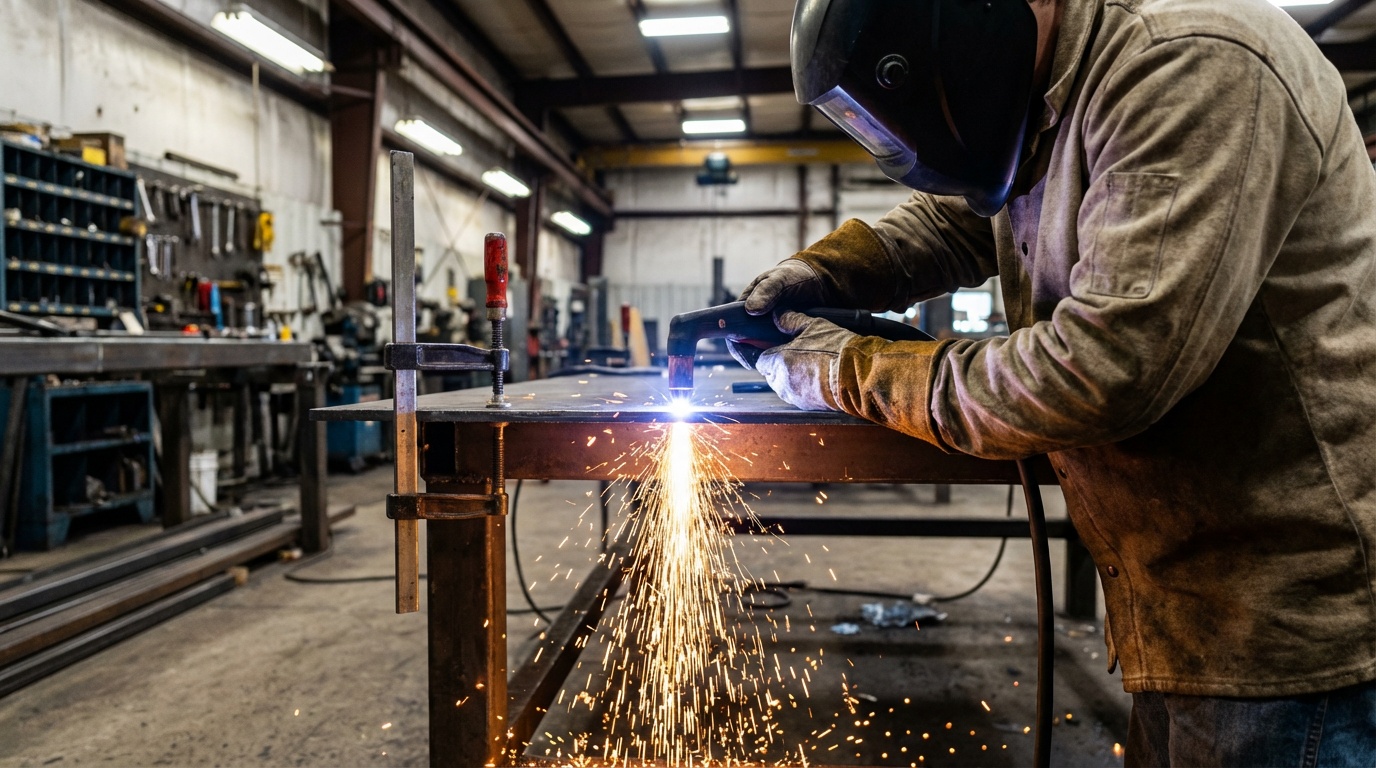
But plasma is faster, cleaner, and cuts shapes a saw can never touch.
I use mine almost every day. Brackets, sculpture panels, stair stringer cutouts, even lettering. Once you have one, you wonder how you ever got by without it.
That's the hook. Now here's what matters when you buy.
1. Cutting Capacity Is the Number That Matters Most
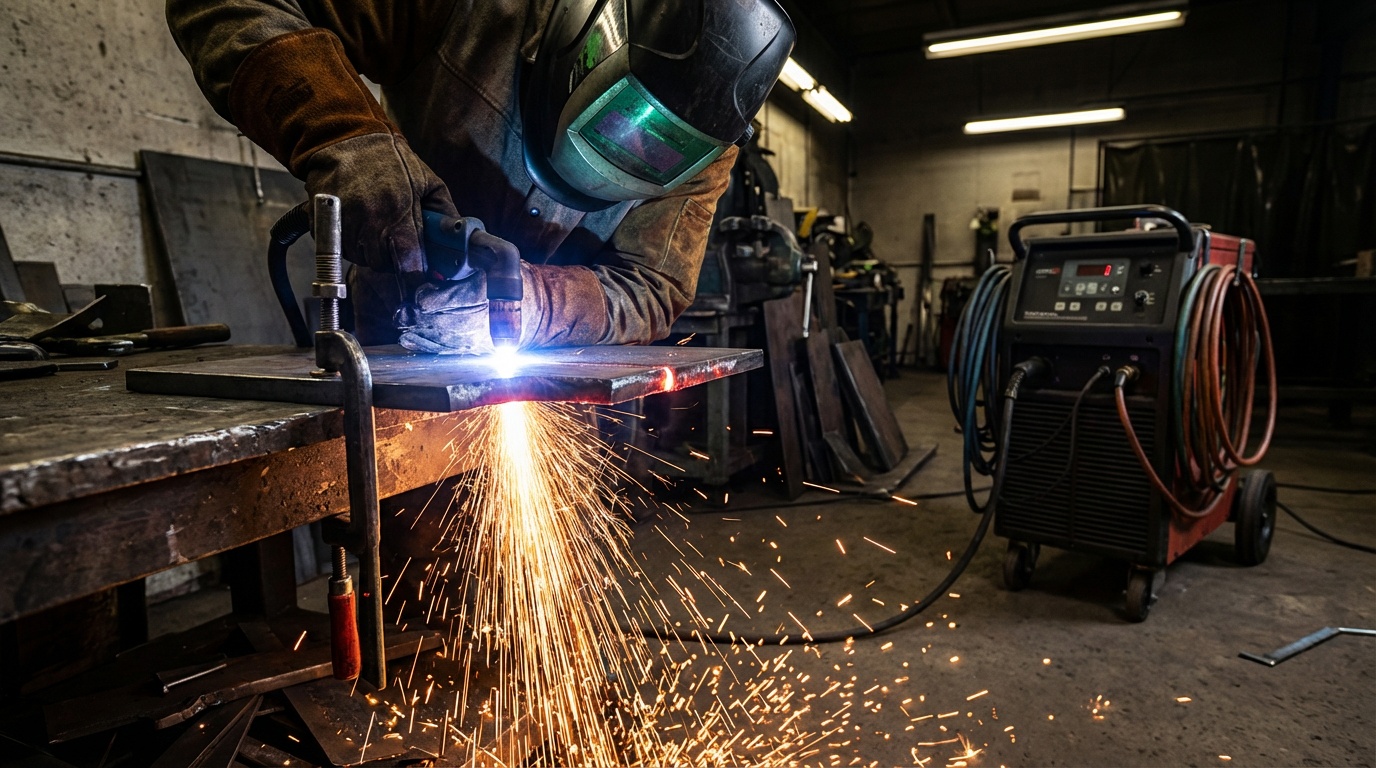
Every plasma cutter advertises two numbers: rated cut and sever cut.
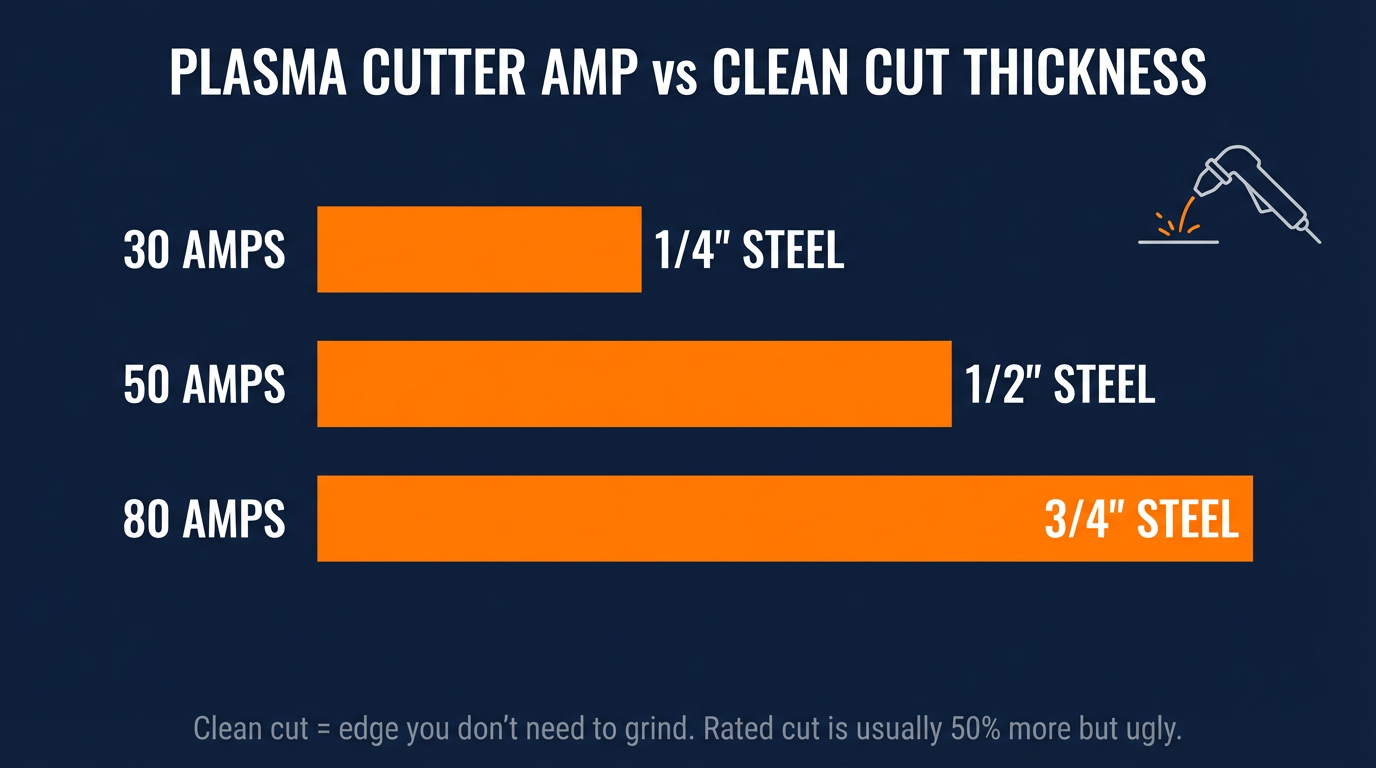
Rated cut is the thickness the machine can cut cleanly at normal speed. Sever cut is the thickness it can technically push through if you crawl slow enough to make it work.
Pay attention to rated cut only. Sever cut is marketing.
If the box says "1/2 inch sever, 1/4 inch rated," that machine cuts 1/4 inch well. Period.
For most home shop work you want at least 3/8 inch rated cut. That handles everything most welders actually work on. If you're cutting 1/2 inch plate regularly, step up to a 50-amp or 60-amp unit.
2. Duty Cycle Tells You If It'll Die on You
Duty cycle is how long the machine can run in a 10 minute window before it shuts off to cool.
A 60% duty cycle at 40 amps means you can cut for 6 minutes straight, then rest 4. That's enough for real shop work.
A 20% duty cycle means 2 minutes of cutting, 8 minutes waiting. That's a hobby machine. Fine for one bracket. Brutal for a real project.
Don't buy anything under 40% duty cycle if you plan to use it seriously.
3. Built-In Air Compressor, or Separate?
Some cheaper cutters come with the compressor built in. On paper it's convenient. In practice, built-in compressors are small, loud, and the cutter runs hot faster.
I strongly prefer a separate shop air compressor with at least 20 gallons and 5 CFM at 90 PSI. Clean, dry air is the single biggest thing that extends consumable life.
Throw a water separator and a desiccant dryer inline. Your tips and electrodes will last 3 to 5 times longer. I learned that the expensive way.
4. Pilot Arc vs. High Frequency Start
Two ways the arc starts:
High-frequency start — cheaper, but the HF signal can damage sensitive electronics and CNC tables.
Pilot arc (blowback start) — lights the arc without touching the metal, works on rusty or painted surfaces, plays nice with CNC.
If you have any plan to put the torch on a CNC plasma table someday, buy pilot arc. Every time.
Pilot arc also makes cutting expanded metal or grates way easier. The arc doesn't drop out when you cross a gap.
5. Consumables Cost More Than the Machine
This is the one nobody talks about.
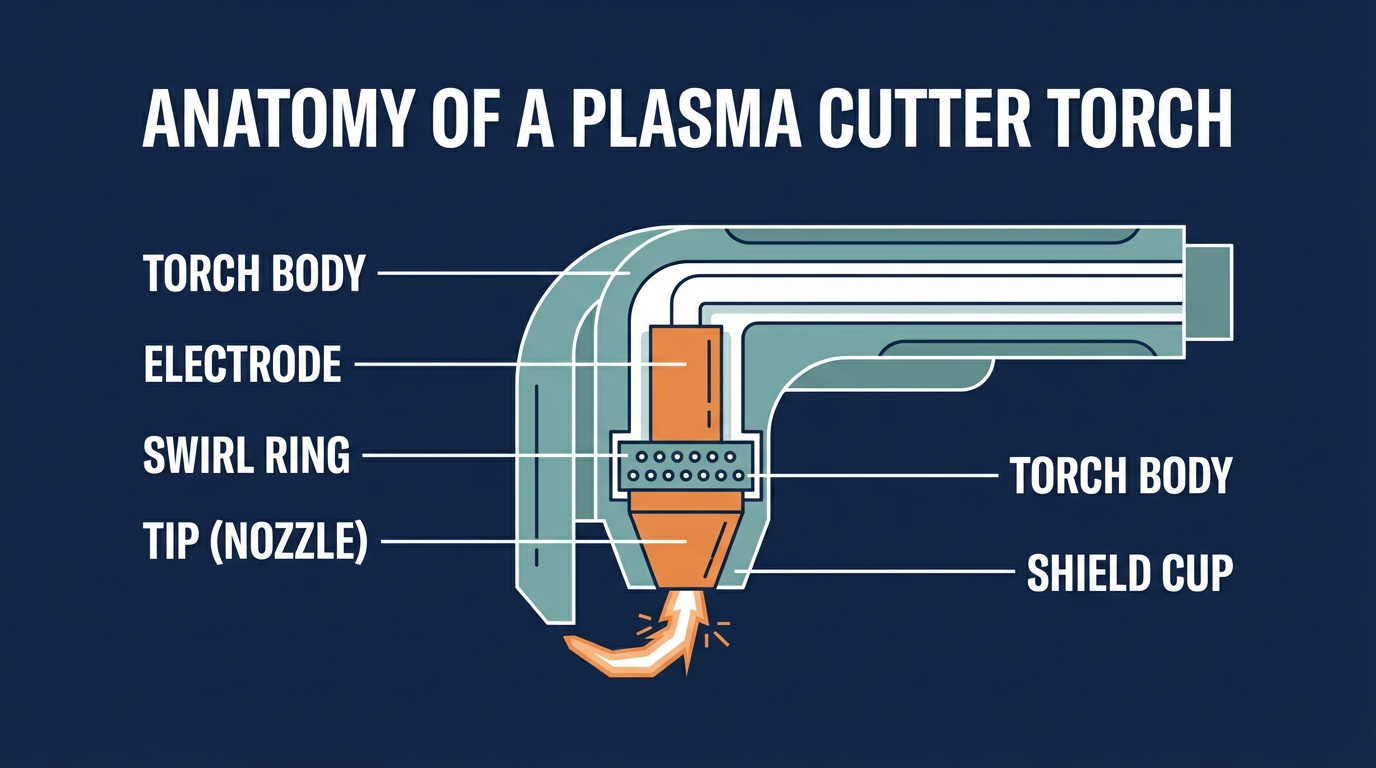
A Hypertherm Powermax 45 tip is around $8. A generic eBay tip for a cheap import unit might be $1.50. Sounds great until you learn the cheap tip lasts 15 minutes and the Hypertherm tip lasts four hours.
Do the math on your actual use, not the shelf price.
For hobby and side-hustle work, Primeweld, ArcBest, or Everlast hit the right balance. Real consumables you can buy online for under $10, machines that cut clean.
For daily shop use, Hypertherm and RazorWeld cost more up front and cost less per cut. That's the math that actually matters.
6. Check the Plug Before You Buy
A lot of 50-amp plasma cutters need 240V and a dedicated 40-amp breaker.
My first cutter kept tripping the breaker in my garage. I couldn't figure out why. Turned out the garage was wired for a dryer. 30 amps. Not enough.
Before you buy, check:
Voltage (120V, 240V, or dual)
Amperage draw at max output
Plug type (NEMA 6-50, 14-50, L6-30, etc.)
Match the machine to your shop power. Don't assume.
Common Mistakes New Buyers Make
Shopping on sever cut numbers instead of rated cut. You will be disappointed.
Skipping the air dryer. Wet air destroys consumables in a week.
Going too small to save money. A 25-amp machine can't handle 1/4 inch steel. You'll upgrade in six months anyway.
Ignoring consumable availability. That no-name brand on Amazon with no tips in stock is a paperweight in two months.
Cutting without a respirator. Plasma throws a lot of hot particulate. Get a P100 mask. Your lungs will thank you.
What I'd Actually Buy Today
If you're starting out and want one cutter that lasts you years:
Hobby / weekend work: Primeweld Cut60 or a BestArc from Amazon— around $300-700, cuts up to 5/8 inch, pilot arc, solid consumables.
Side hustle / semi-pro: Everlast PowerPlasma 62i or a RazorWelds— around $1,100, 60 amps, pilot arc, good duty cycle.
Best for Daily shop / CNC: Hypertherm Powermax 45 XP — around $2,000 new, bulletproof, consumables that go forever.
Buy for the work you'll actually be doing a year from now. Not the work you're doing today.
Join 30,000+ students learning to weld home with my online course:
>>> Check out 1 Day Welder here
>>> Shop the 1 Day Welder Amazon Store
Talk soon,
Quinn "consumables are a racket" Morrissette
P.S. When your cuts start getting rough — more dross, wider kerf — replace the tip before you replace the electrode. Most guys do it backwards and then wonder why nothing got better.