Stop Ignoring Your Ground Clamp
A fancy new Miller Multimatic 220 or an ratty old stick welder? Worthless without a proper ground. Most beginners never even think about their ground clamp until their welds look like garbage. You're fighting your machine, your settings, and your own technique, but the real enemy is often a crappy connection. A bad ground clamp means a weak, unstable arc, inconsistent heat, and welds that look like a pigeon took a dump on your project. It's the unsung hero, the forgotten half of your welding circuit.
What a Ground Clamp Actually Does: Completing the Circuit
Think of it like this: electricity wants to go home. It flows out of your welder, through your stinger or MIG gun, jumps across the arc you create, melts the metal, and then it needs a clear, easy path back to the machine. That's where your ground clamp comes in. It literally completes the circuit, allowing those electrons to flow smoothly. Without a solid connection, that path back is broken, or at least full of speed bumps. The machine struggles to maintain the arc, you get spatter, porosity, and an arc that dances like it's on hot coals. You want a consistent, stable arc? Start with a solid ground.
The Ground Clamp's Dirty Little Secret: Resistance
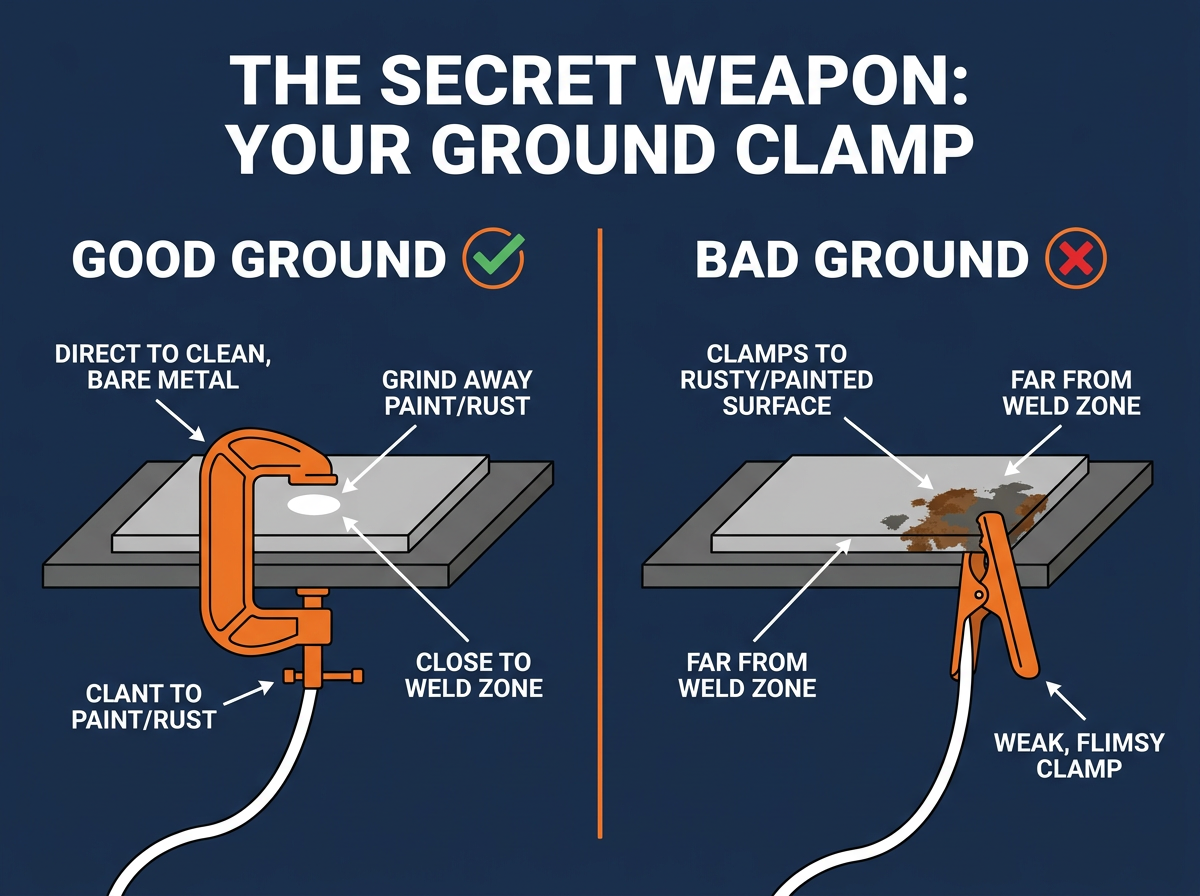
Every connection in your welding circuit has resistance, and you want as little of it as possible. A poor ground clamp connection — maybe it's rusty, painted, or just flimsy — creates high resistance. This resistance generates heat where you don't want it (at the clamp!), reduces the available welding current, and makes your arc unstable. Imagine trying to run water through a kinked hose. That's what your welding current feels like with a high-resistance ground. You'll dial up your amperage, trying to compensate, but all you're doing is putting more stress on your machine and making your problem worse. Get rid of that resistance.
Where to Clamp It: The "Direct Path" Rule
This is critical: clamp directly to your workpiece. Not to the welding table, not to a nearby rusty I-beam, and definitely not to a piece of painted scrap "just for a quick tack." You need clean, bare metal-to-metal contact, as close to your weld as possible. If you're welding a small bracket, clamp right to the bracket. If you're building a big frame, clamp to the section you're currently working on. Every inch of travel through un-grounded metal, every painted surface, every rusty spot, adds resistance and weakens your current. Use a grinder or a wire brush to shine up a spot if you have to.
Upgrade Your Bite: When to Ditch the Cheap Stuff
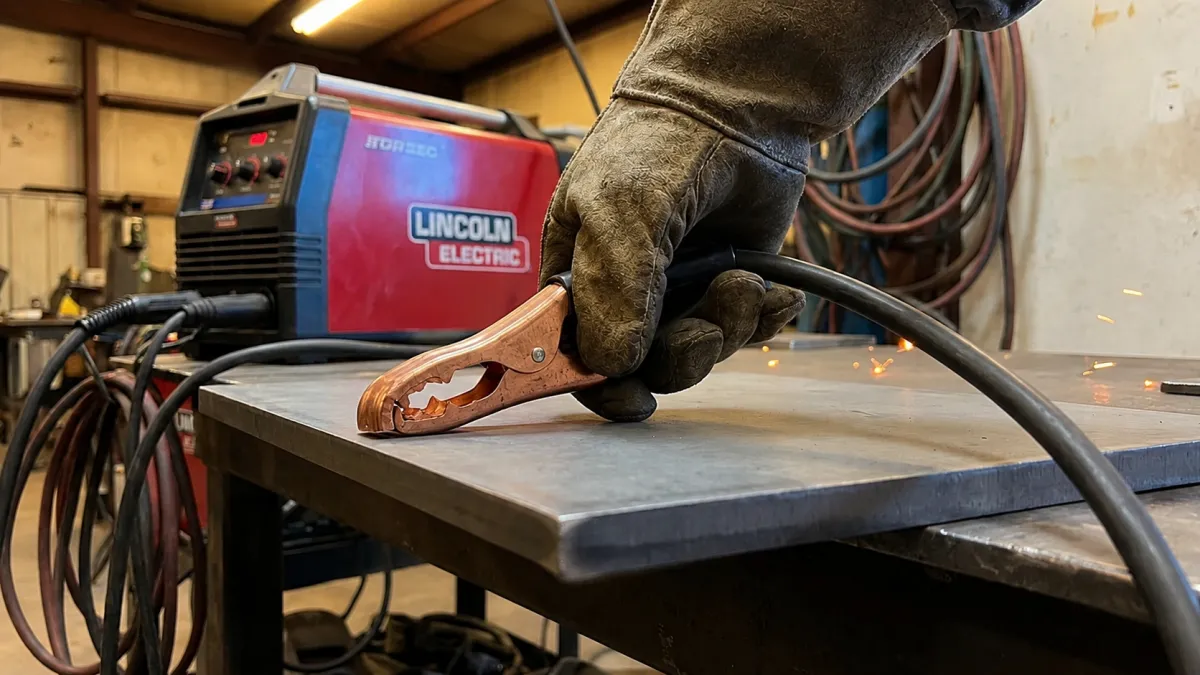
The tiny, flimsy spring clamp that came with your budget Hobart 140? It's probably barely adequate for light gauge stuff. For anything serious, you need a clamp with some real bite and solid copper or brass jaws. Think about C-clamps or magnetic clamps for different situations. A heavy-duty C-clamp style ground, like a Tweco or Lenco, clamps down hard and makes excellent contact. Magnetic grounds are great for quick setups on flat, clean steel, but always make sure they're strong enough and free of debris. And for God's sake, make sure the cable connection to the clamp itself is tight. A loose bolt there is just as bad as a rusty workpiece.
Common Mistakes
Clamping to Painted or Rusty Metal: This is the number one killer of a good ground. Paint and rust are insulators. They block the electrical flow and create massive resistance. Always grind or wire brush a clean spot.
Clamping Too Far from the Weld: The further the current has to travel through your workpiece, the more chance for resistance and voltage drop. Keep it close to where the arc is happening for maximum stability.
Using Flimsy, Cheap Clamps: Those small, stamped steel clamps with weak springs? They don't make good contact and often aren't rated for the amperage you're running. Invest in a heavy-duty copper or brass clamp. It'll last forever and pay for itself in better welds.
Loose Cable Connection at the Clamp: Check the bolt or crimp where your welding cable connects to the ground clamp. A loose connection here can cause heat buildup, arc instability, and even melt your cable or clamp over time. Tighten it up!
Clamping to a Workbench (Unless Properly Grounded): Your workbench isn't automatically grounded just because it's metal. Unless you've run a dedicated ground cable from your machine to your bench, clamp directly to your workpiece.
Forget fancy techniques for a minute. Dial in your ground. It's a simple fix that'll instantly clean up your arc, make your machine happier, and deliver stronger, cleaner welds. Don't let a $20 piece of equipment ruin a $2000 welder. Quinn "The Ground Hound" Morrissette
Join 30,000+ students learning to weld at home with my online course:
>>> Check out 1 Day Welder here
>>> Shop the 1 Day Welder Amazon Store