The Truth About Your Ground Clamp: Stop Fighting Your Welder
The Truth About Your Ground Clamp: Stop Fighting Your Welder
Your arc's sputtering, your welds look like garbage, and you're blaming the machine. Wrong. Your ground clamp is probably the real culprit.
A bad ground connection is like trying to run a race with one leg tied. It chokes your current, destabilizes your arc, and leaves you with weak, ugly welds. This isn't just about aesthetics; it's about structural integrity and avoiding endless frustration. Don't let a cheap or poorly connected clamp ruin your day and your project.
Why Your Ground Clamp Isn't Just a "Clamp"
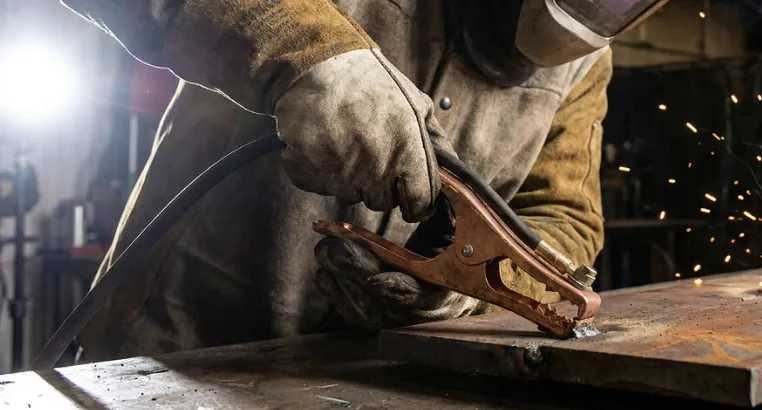
Think of your ground clamp as half of the electrical circuit. Current flows from your welder, through your torch, across the arc, through your workpiece, into the ground clamp, and back to the machine. Any resistance in that circuit — especially at the ground clamp — means less current for your arc.
This "voltage drop" translates directly to a weak, erratic arc. You'll see it as sputtering, porosity, inconsistent penetration, and just generally fighting the machine. Your fancy Lincoln Electric, Miller, or Hobart machine can't magically fix a bad ground.
Picking the Right Ground Clamp for the Job
Most cheap welders come with flimsy, stamped steel clamps that are barely adequate. Do yourself a favor and upgrade. A solid brass or copper clamp with strong spring pressure is worth every penny.
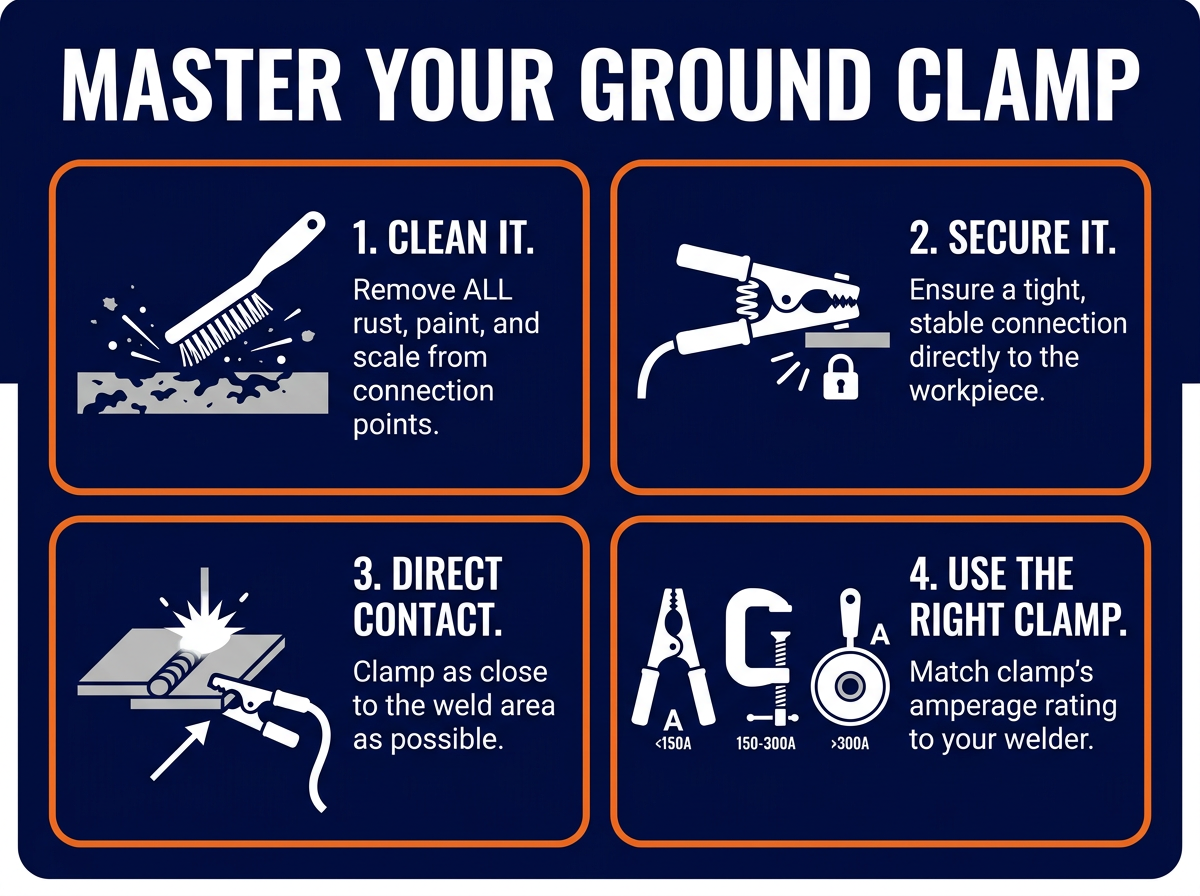
Match your clamp to your welder's max output. Don't try to run 200 amps through a dinky 100-amp clamp — it'll overheat, lose conductivity, and eventually fail. For general home shop use, a good quality spring-loaded brass clamp is tough to beat. C-clamps offer more bite for heavier work, while magnetic clamps are convenient but can introduce arc blow or lose connection if the surface isn't perfectly clean.
Making a Killer Ground Connection Every Time
Cleanliness is Godliness: This is step one, always. Grind off rust, paint, scale, grease, and any other crap down to bare, shiny metal. Not just the contact point on your workpiece, but also where your clamp connects. Use a wire wheel or a flap disc on an angle grinder — make it sparkle.
Direct Contact: Clamp directly to the piece you're welding, if possible. Don't clamp to the welding table if the table isn't making excellent electrical contact with your workpiece. A solid connection through a heavy-gauge cable is critical.
Large Surface Area: Don't just clip the edge. Get as much of the clamp's jaws in contact with the bare metal as possible. More contact area equals less resistance, which means a stronger, more stable arc.
Proximity: For DC welding, clamping close to your weld area usually works best, minimizing the path current has to travel. While AC can sometimes be affected by arc blow if too close, for most beginners, keeping the clamp reasonably near your work is the way to go.
Troubleshooting Ground Clamp Woes
If your arc is acting up, check these things:
- Symptoms: Erratic arc, excessive spatter, porosity, lack of fusion, difficulty starting the arc, workpiece getting surprisingly hot at the ground clamp, or the clamp itself getting hot.
- First Check: Is it clean? Really clean? Grind it again. Don't just visually inspect — make sure it's down to bare metal.
- Second Check: Is it tight? Wiggle the clamp. If it moves even a little, re-position and clamp harder. You want a rock-solid grip.
- Third Check: Is the clamp itself damaged? Are the jaws worn down or covered in spatter? Clean them thoroughly with a wire brush or even file them flat if they're pitted. Replace the clamp if it's beyond repair.
- Cable Check: Sometimes the ground cable connection to the clamp or to the welder is loose or corroded. Check those terminals too. A cheap crimp on the cable end can cause major headaches.
Common Ground Clamp Mistakes
- Clamping to Painted or Rusty Metal: This is the biggest sin. Paint, rust, and scale are insulators. You're basically trying to weld through an electrical barrier, which is impossible. Always grind to bright metal.
- Using an Undersized Clamp: Trying to run high amps through a dinky clamp meant for sheet metal. It'll overheat, cause resistance, and won't deliver the current your arc needs.
- Clamping to the Bench, Not the Workpiece: Your bench might not be perfectly conductive to your part, or the connection could be compromised by rust or debris. Always try to clamp directly to the work for the best path.
- Ignoring Clamp Maintenance: Spatter builds up on the jaws, reducing contact. Jaws get pitted and worn. Clean your clamp's contact points regularly — it's part of machine maintenance.
- Not Checking Cable Connections: The connection where the cable enters the clamp or where it plugs into the welder can corrode or loosen over time. Take a minute to ensure these are tight and clean.
A solid ground connection isn't glamorous, but it's foundational. Master this, and you'll eliminate a huge headache from your welding journey. Stop fighting your machine, fix your ground, and start laying down those perfect beads.
Quinn "The Spark" Morrissette
Join 30,000+ students learning to weld at home with my online course:
>>> Check out 1 Day Welder here
>>> Shop the 1 Day Welder Amazon Store