Why Your MIG Welds Look Ugly (And the 3 Settings That Fix It)
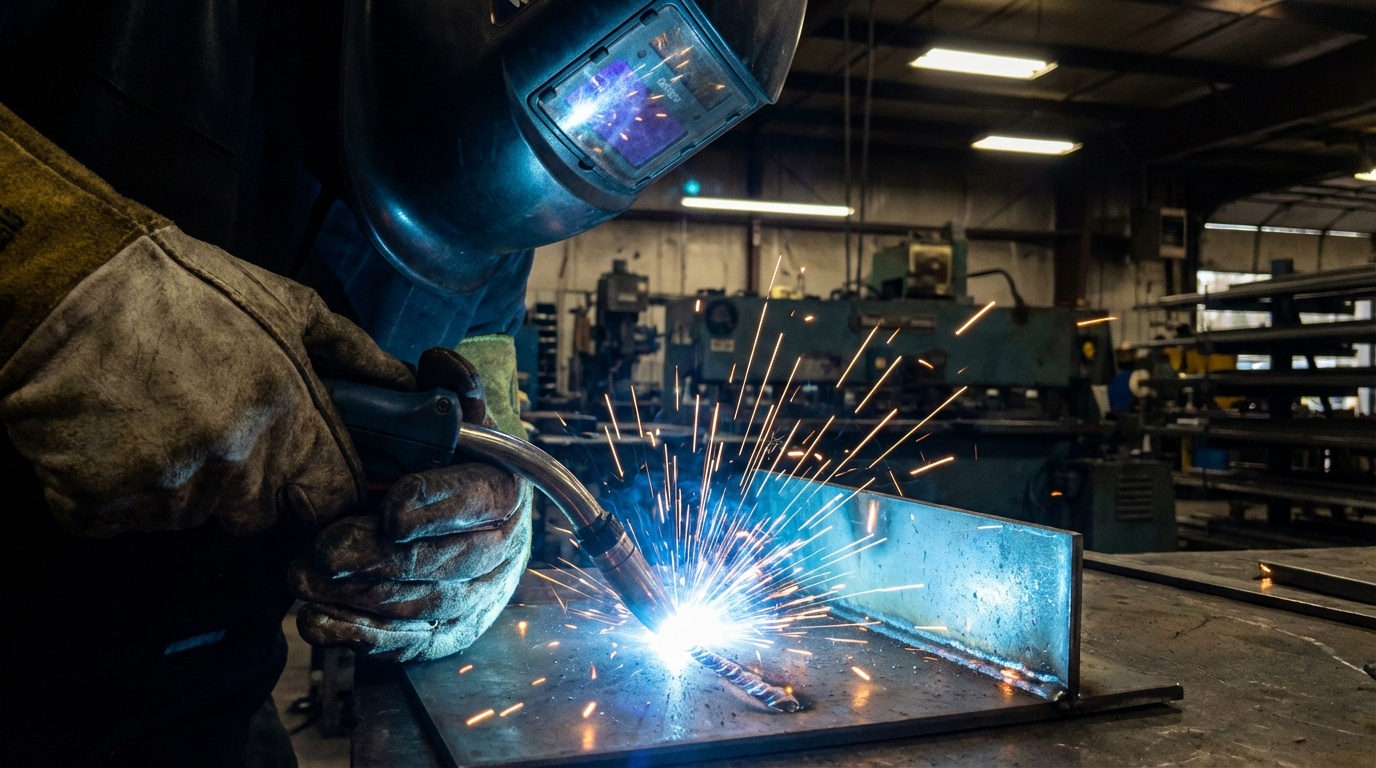
Your first MIG weld probably looks like a caterpillar had a bad day.
Bumpy. Inconsistent. Spatter everywhere.
Here's the thing — it's almost never your technique. It's almost always your settings.
Most beginners tinker with their gun angle, their travel speed, their grip. They blame themselves. But the machine is the problem.
There are three settings that control 90% of how a MIG weld looks. Get these right and your welds improve immediately. Not after weeks of practice. Immediately.
Wire Speed (Amperage)
Wire speed controls how much filler metal gets deposited. Too slow and the wire burns back to the tip. Too fast and you get a sputtering, ugly pile-up.
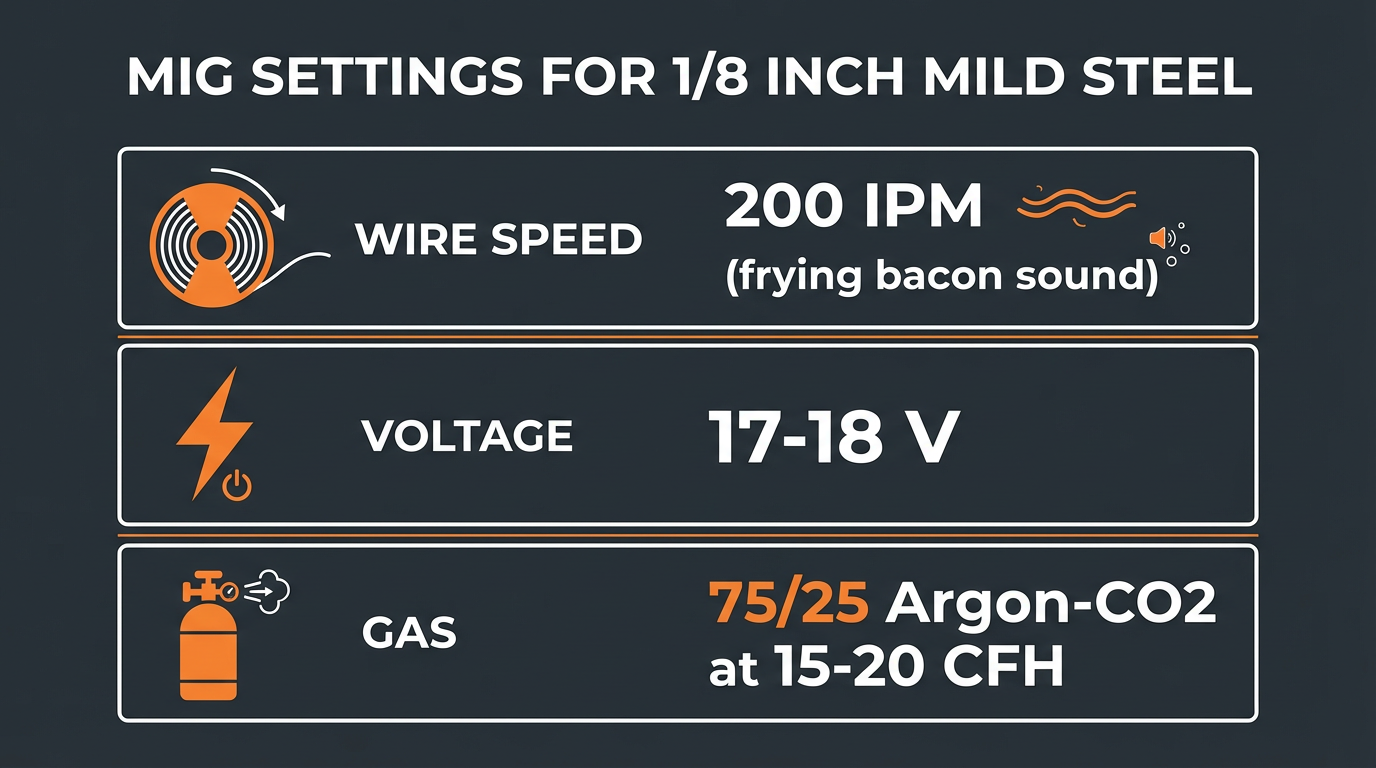
For 1/8" mild steel, start around 200 inches per minute. Dial up or down from there.
The sound you want: a steady frying bacon sound. If it's crackling and popping unevenly, your wire speed is off.
Voltage
Voltage controls your arc length — how hot and wide the puddle gets.
Too low and the weld sits cold and narrow on top of the metal. Too high and it blows through or goes too wide and flat.
For 1/8" steel, try 17–18V with your wire speed dialed in. The two settings work together. When both are tuned, the bead flattens out and the spatter drops dramatically.
This surprises most people. They think voltage is just "more heat." It's not. Voltage and wire speed need to be balanced against each other.
Gas Flow Rate
If your welds have porosity — tiny holes pockmarked across the surface — your gas coverage is the culprit.
The most common setup for mild steel: 75% Argon / 25% CO2. Set your flow rate to 15–20 CFH.
Too little gas and the atmosphere contaminates the weld. Too much and you create turbulence that sucks outside air in anyway. 15–20 CFH is the sweet spot.
One more thing: check your nozzle. A nozzle clogged with spatter buildup kills your gas coverage before it even starts. Clean it every few hours.
One Thing People Skip
None of this matters if your material is dirty.
Oil, rust, mill scale, paint — any of it causes problems. Spatter, porosity, poor fusion. Clean your metal with a wire brush or an angle grinder before you touch the trigger.
I know it feels like extra work. It's not. It saves you more time than it takes.
Quick Reference — 1/8" Mild Steel, MIG
- Wire Speed: ~200 IPM (adjust until you hear frying bacon)
- Voltage: 17–18V
- Gas: 75/25 Argon-CO2 at 15–20 CFH
- Clean the metal first. Always.
Start there. Run one practice bead. Adjust one thing at a time. Don't touch your technique until the machine is dialed.
Most people try to fix their movement before they fix their settings. That's backwards.
Join 30,000+ students learning to weld at home with my online course:
>>> Check out 1 Day Welder here
>>> Shop the 1 Day Welder Amazon Store
Talk soon,
Quinn "frying bacon is the sound you want" Morrissette
P.S. After you dial in your settings, run a bead on scrap before you touch your actual project. Two minutes of practice saves a ruined piece.